One Nucleo. Nine Instruments.
The essential measurement suite for every STM32 developer.
Everything on one screen
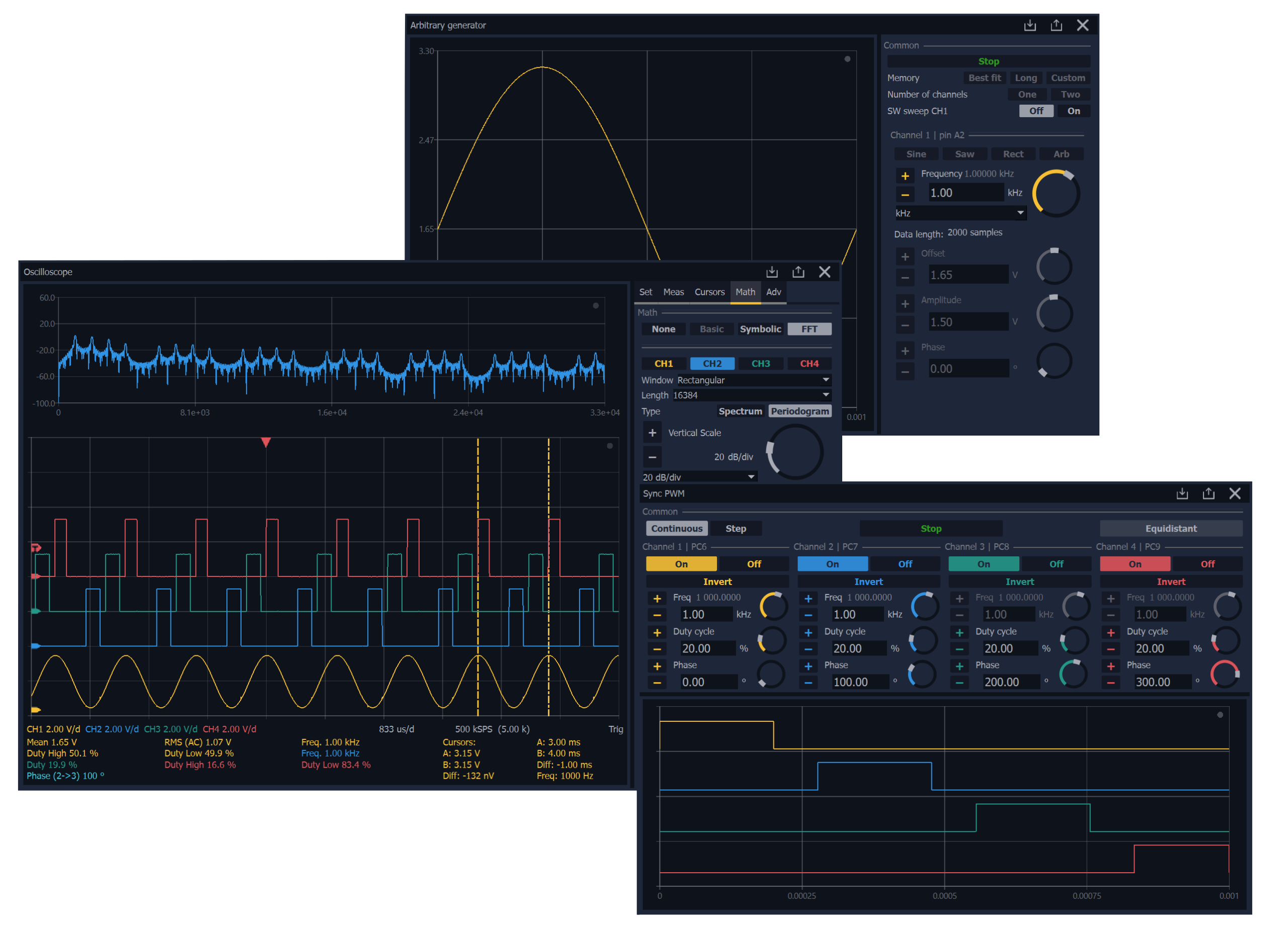
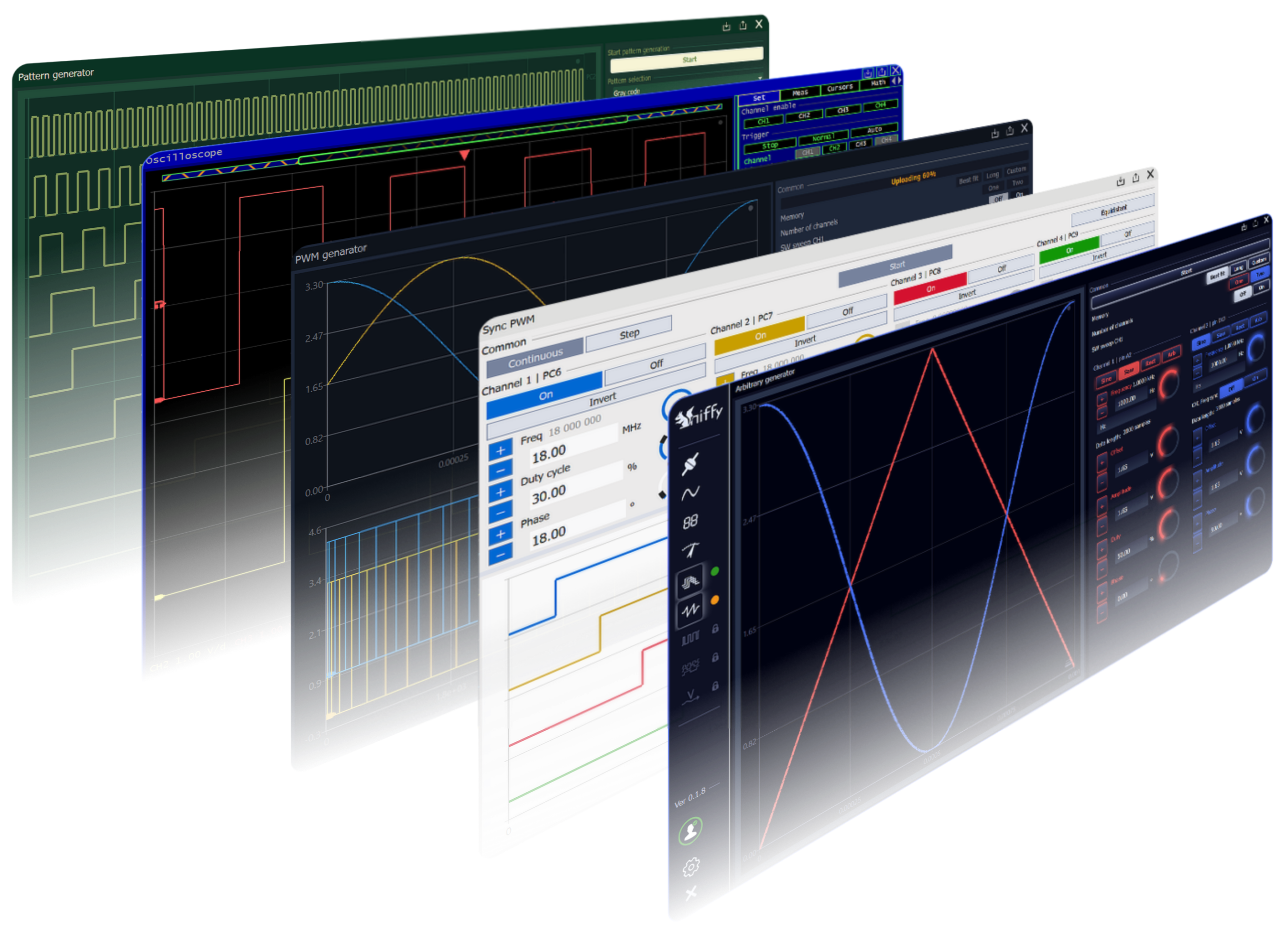
Sniffy is a modular software platform for signal measurement, analysis and generation. It works as a unified graphical interface for STM32 microcontrollers and combines the functions of several laboratory instruments into one flexible control environment.
Wide hardware compatibility
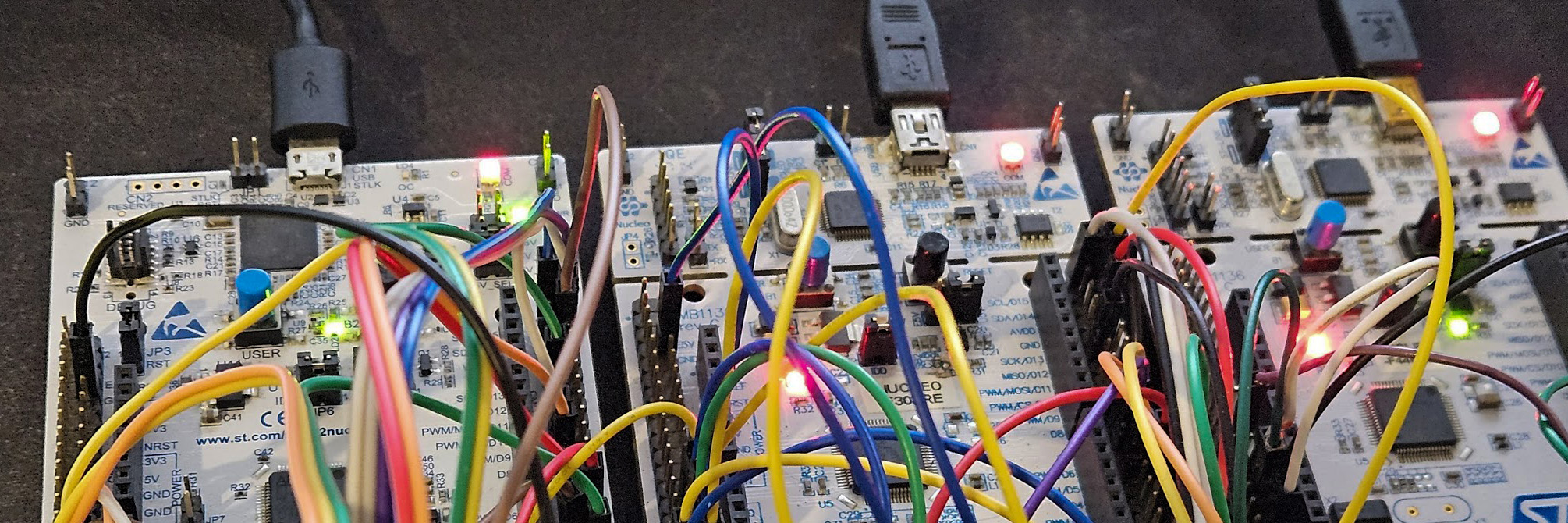
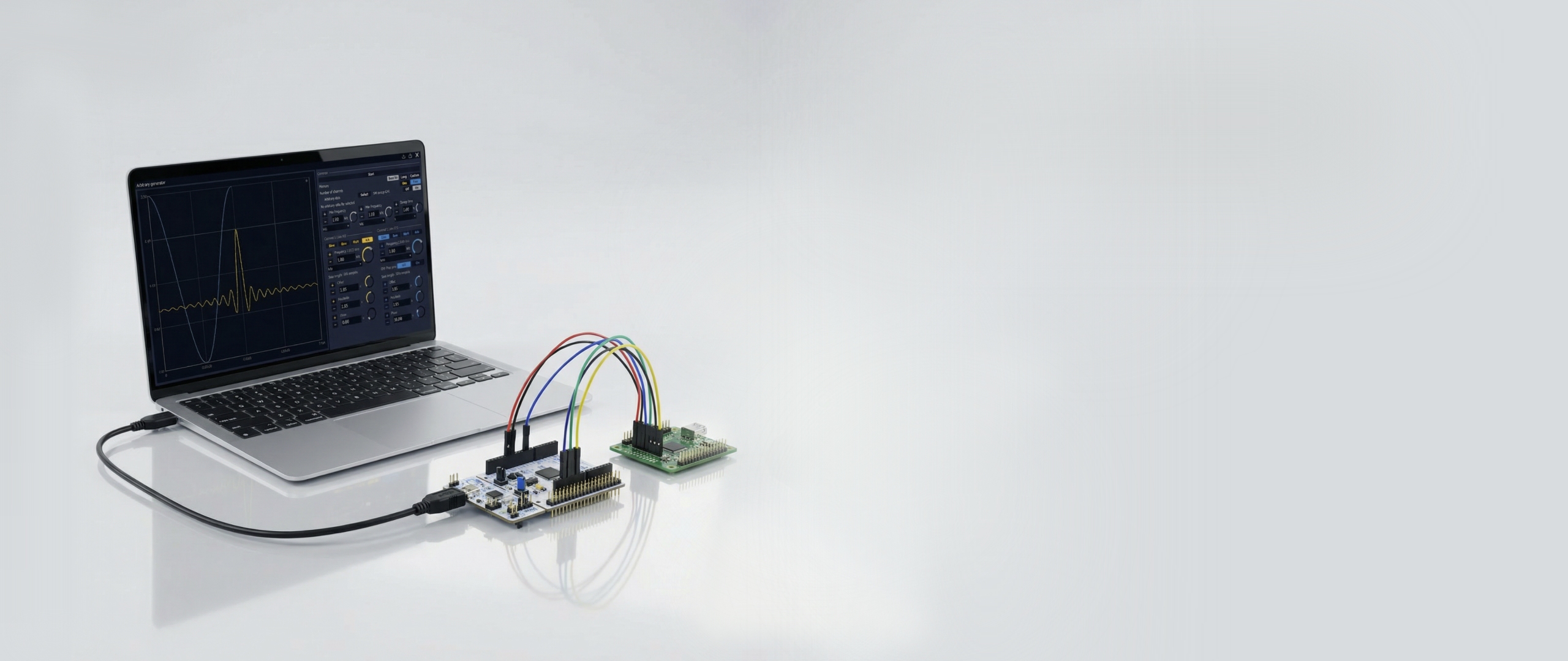
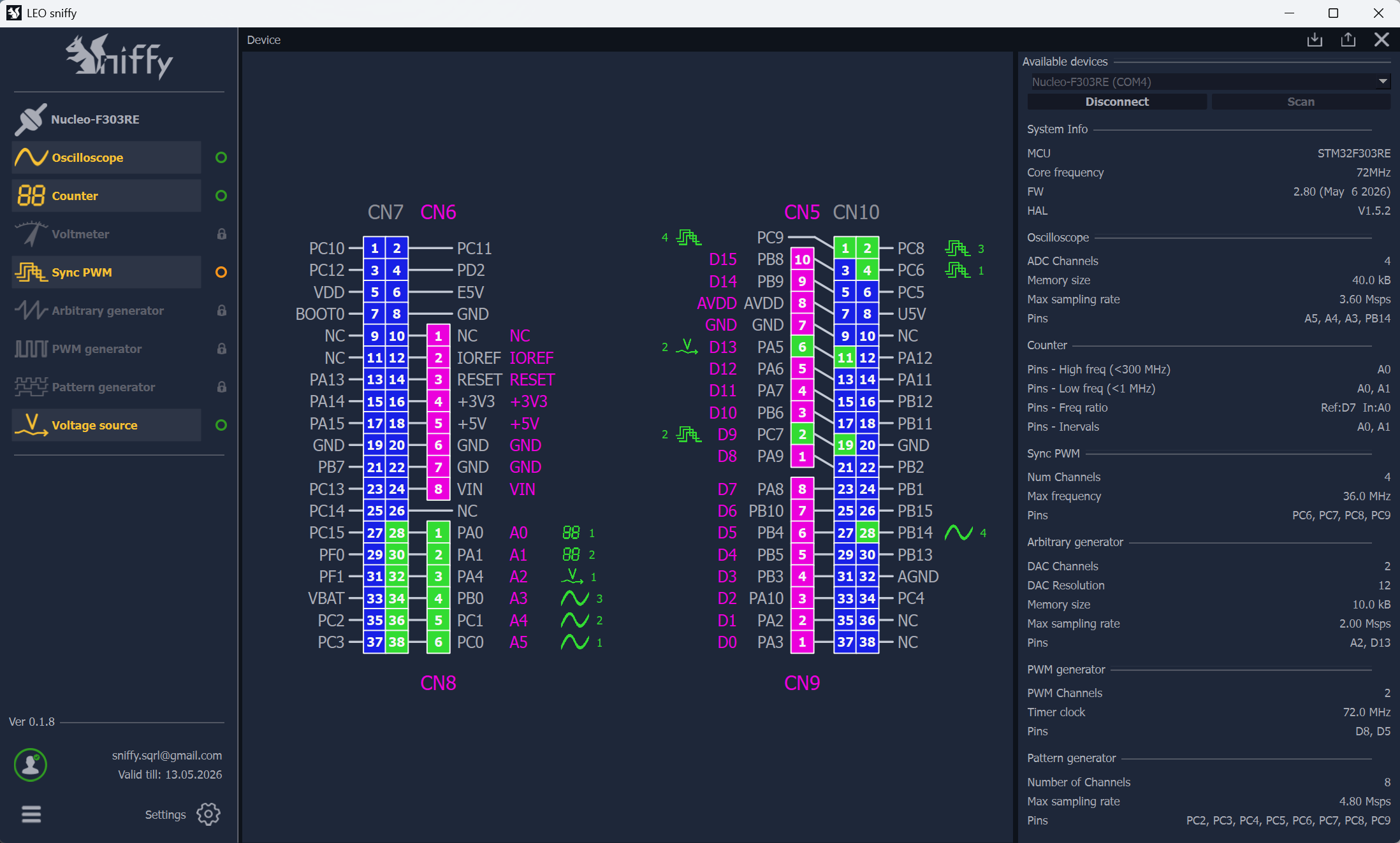
Sniffy runs on a wide range of STMicroelectronics NUCLEO development kits based on STM32 chips. This eliminates the need for expensive specialised hardware: in most cases, you can simply take any available NUCLEO kit, flash the firmware, and start measuring, testing and analysing. Sniffy delivers a fast start, low cost and maximum flexibility for development and experimentation.
Tell it to your gadgets
Say goodbye to tedious clicking through complex menus. Thanks to native MCP (Model Context Protocol) integration, you can control the entire measurement setup using natural language. Watch an AI agent autonomously evaluate live data and decide the next steps in real time.

 Quick start
 Low cost
 All in one UI
 Wide compatibility









Overview
Oscilloscope
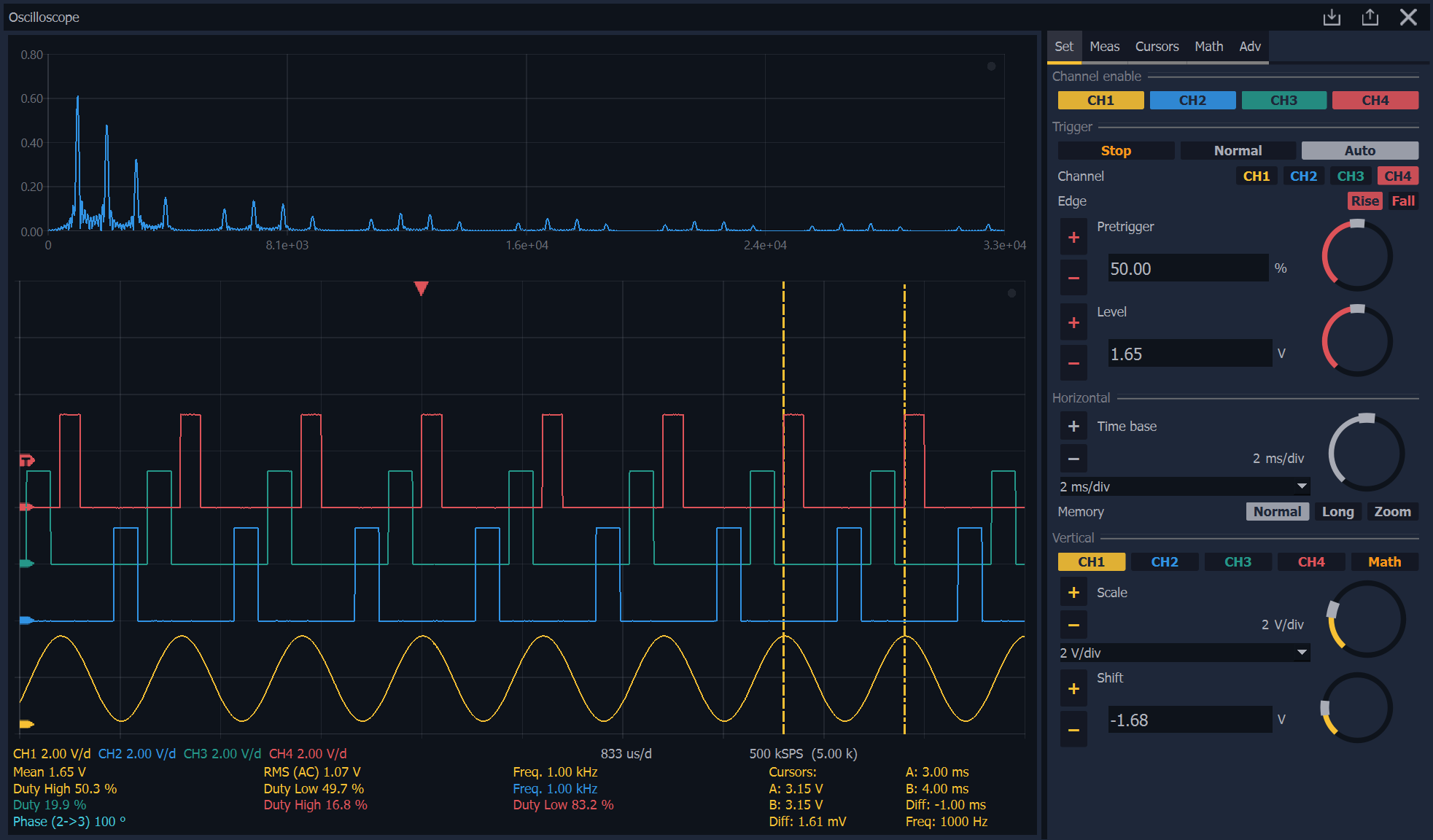
The oscilloscope is the primary tool for real-time signal visualisation and analysis, supporting up to 4 channels. It offers comprehensive trigger modes (Auto, Normal, Single) and adjustable time bases and vertical sensitivity. Includes automatic measurements (RMS, Peak-to-Peak, Frequency), cursor control, FFT spectral analysis, XY mode (Lissajous figures) and symbolic mathematical operations between channels.
Voltmeter
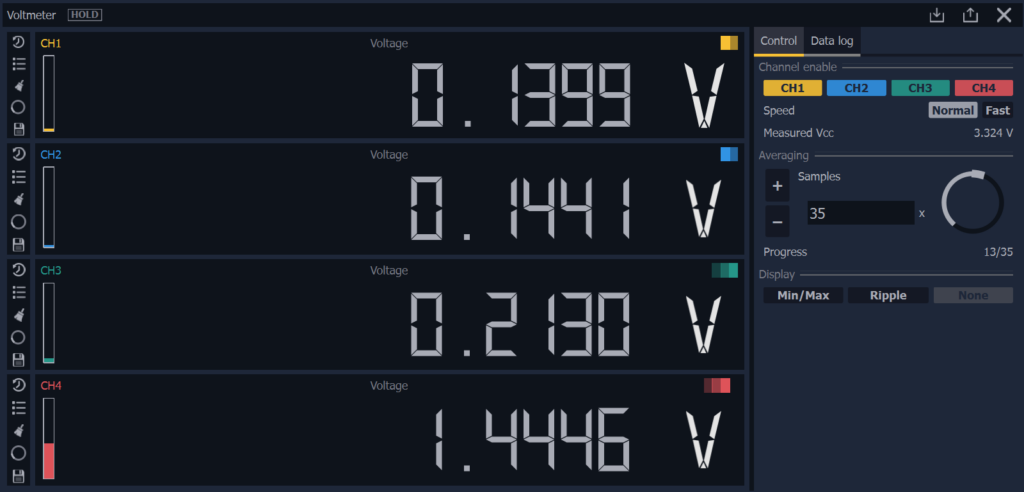
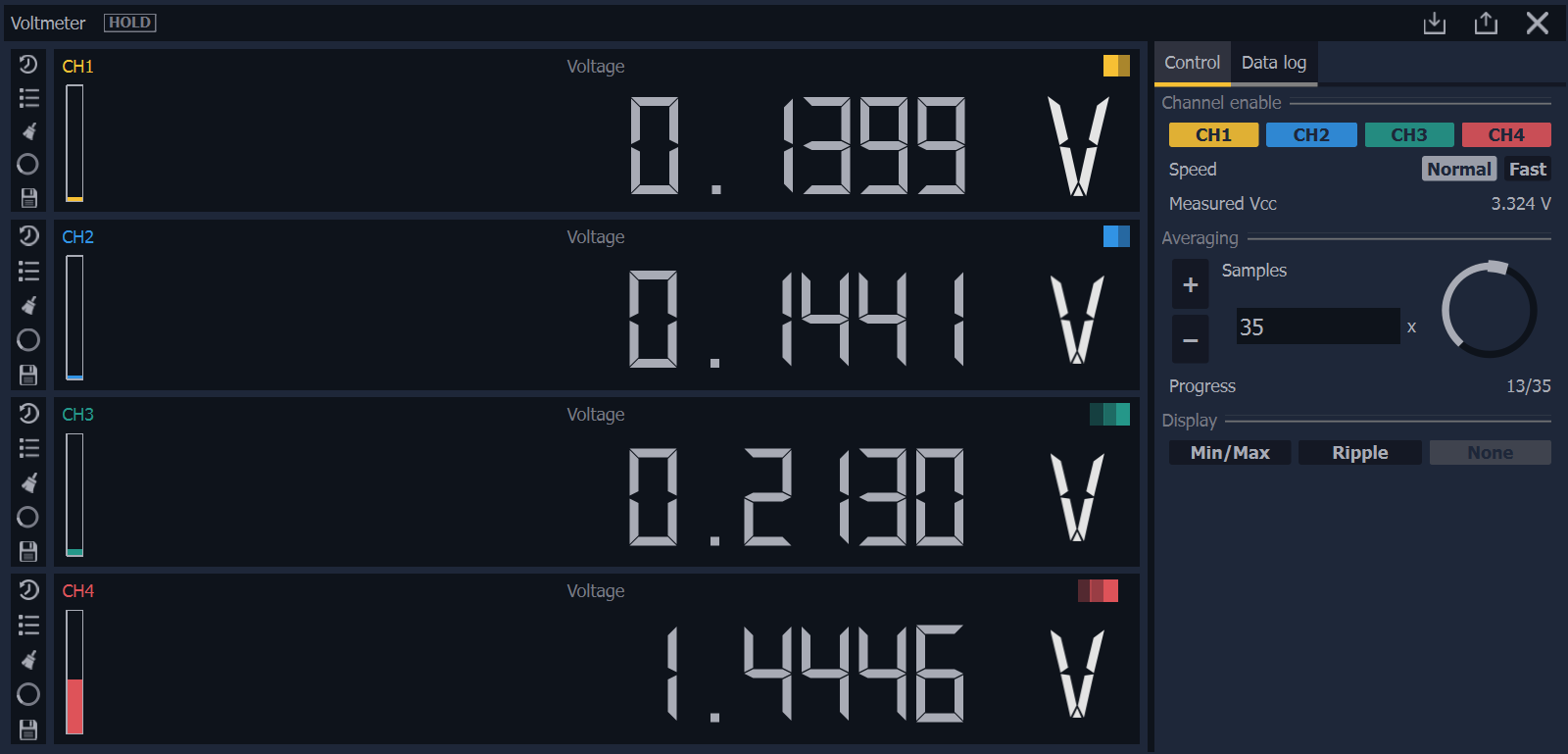
Designed for precise voltage measurement, the voltmeter features a clear numeric display similar to desktop instruments. It includes a history graph for tracking trends over time and a data logger for exporting long-term measurements to CSV files. It supports Min/Max value tracking, ripple measurement, and configurable averaging for smoothing noisy signals.
Arbitrary Waveform Generator (ArbGen)
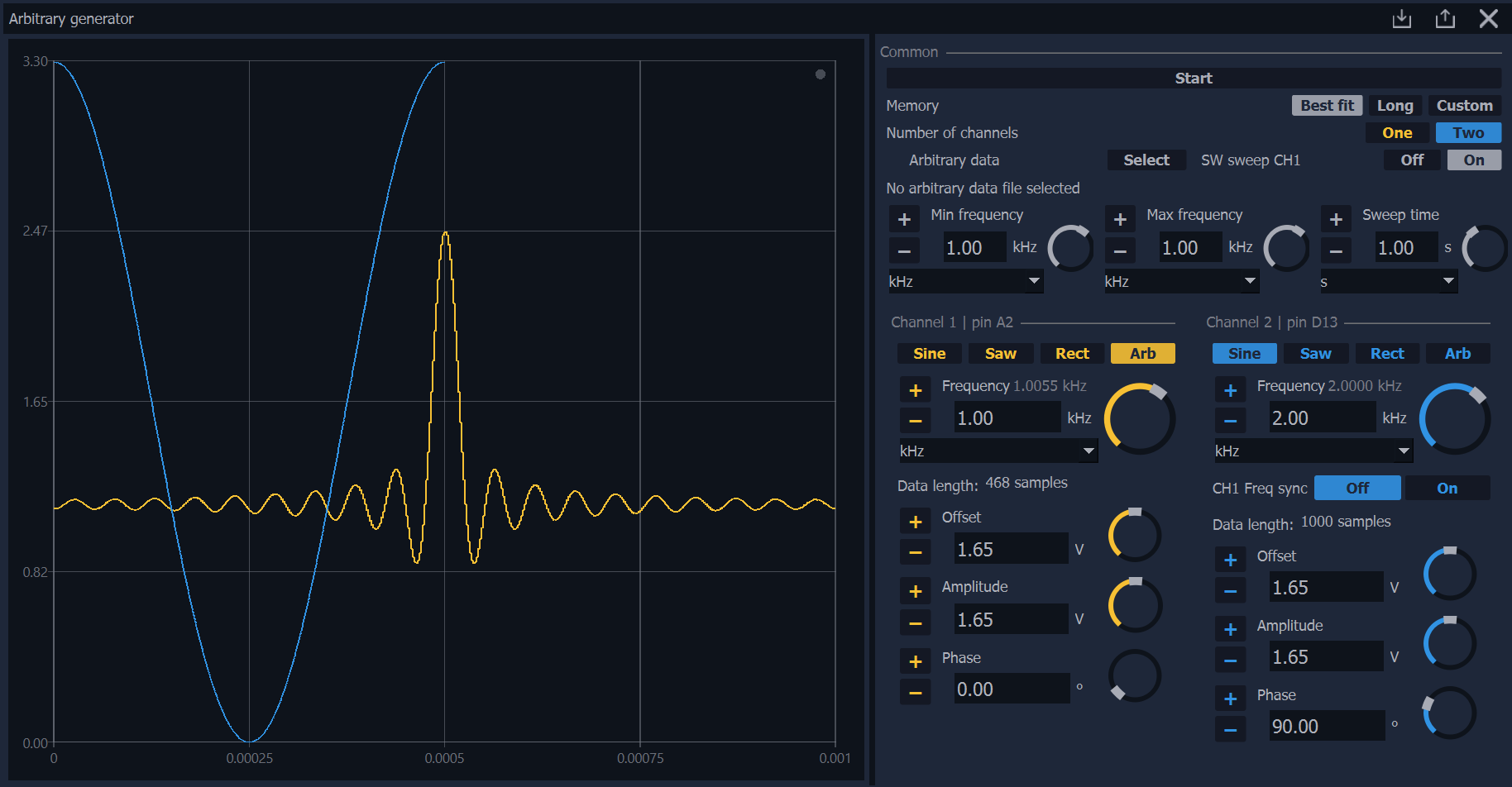
This module acts as a versatile function generator capable of producing both standard waveforms (Sine, Triangle, Square) and custom arbitrary signals. Users can finely tune frequency, amplitude, offset and phase for each channel. It allows importing custom waveform data from CSV or TXT files. It also provides a Sweep function, enabling a smoothly changing frequency signal where you can define start and end frequency (min/max) and sweep cycle duration.
Modulated PWM Generator (variable duty-cycle)
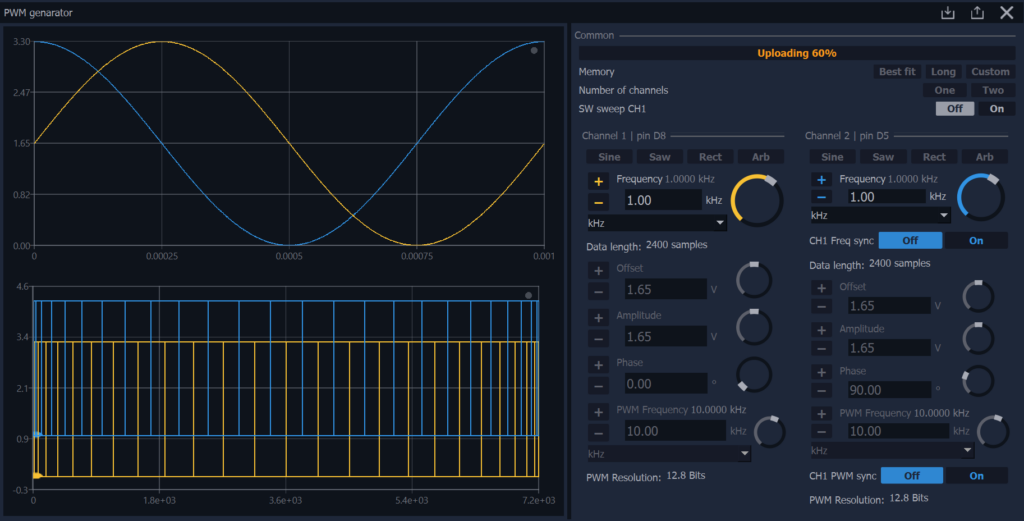
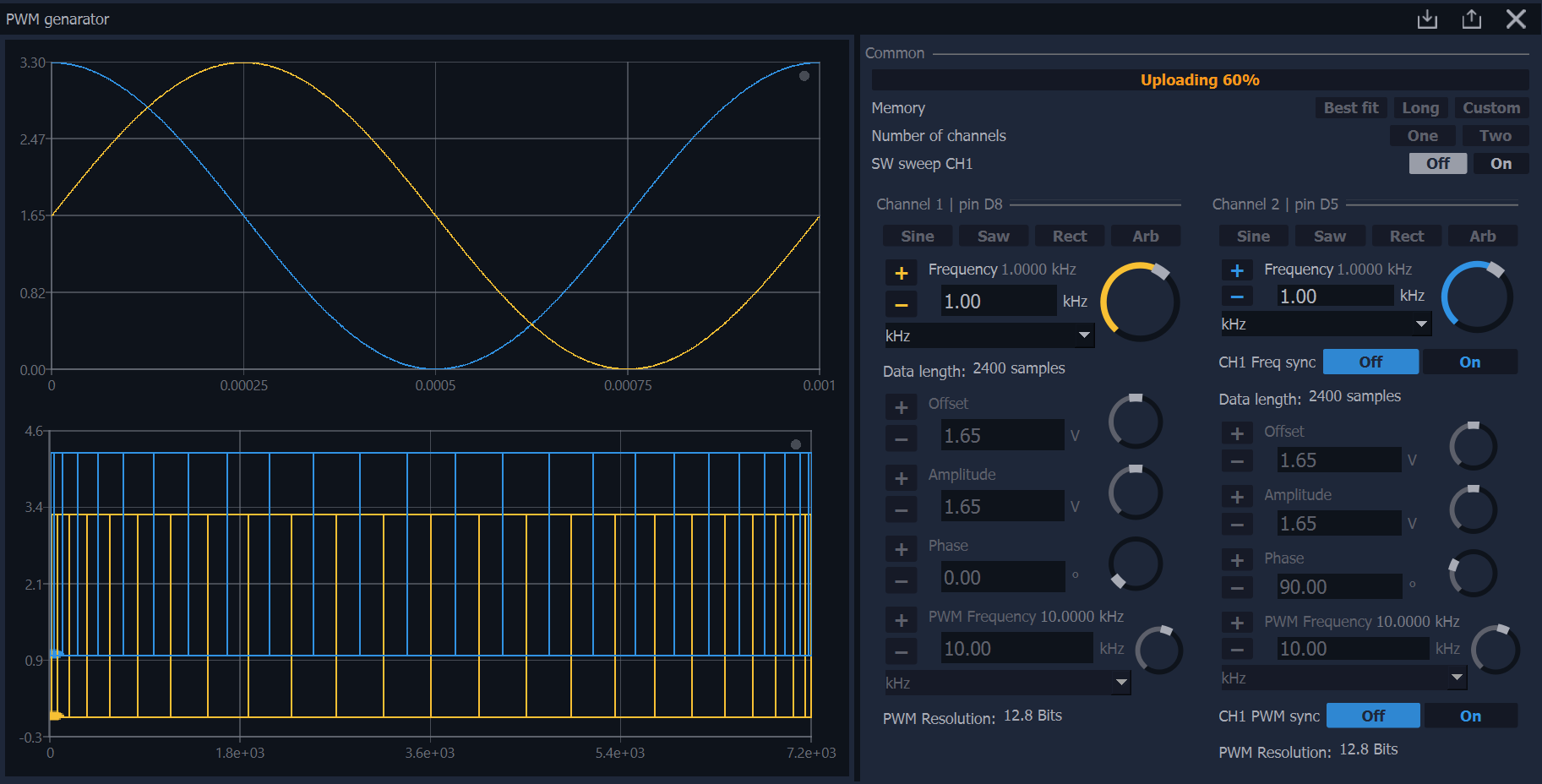
This module generates a PWM signal whose duty cycle changes dynamically over time according to the selected profile. Duty-cycle modulation can follow standard functions (Sine, Triangle, Square) or a custom arbitrary user-defined signal. It supports independent configuration of PWM carrier frequency and modulation frequency.
Pattern Generator
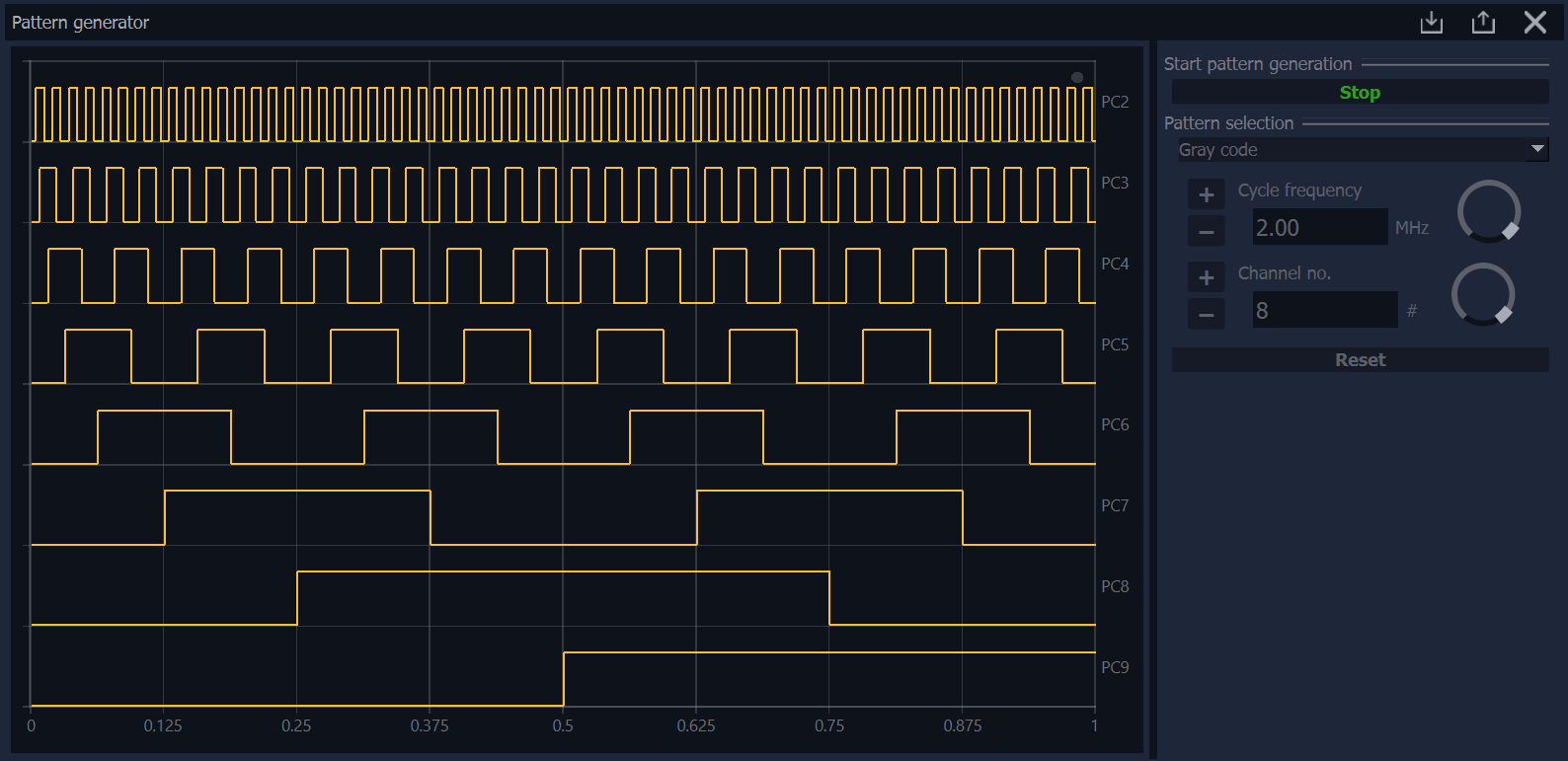
The pattern generator acts as a digital logic source, useful for testing digital circuits and communication buses. It can drive output pins with predefined sequences or algorithmic patterns. Modes include binary counter, Gray code generator, and user-defined sequences for custom logic states.
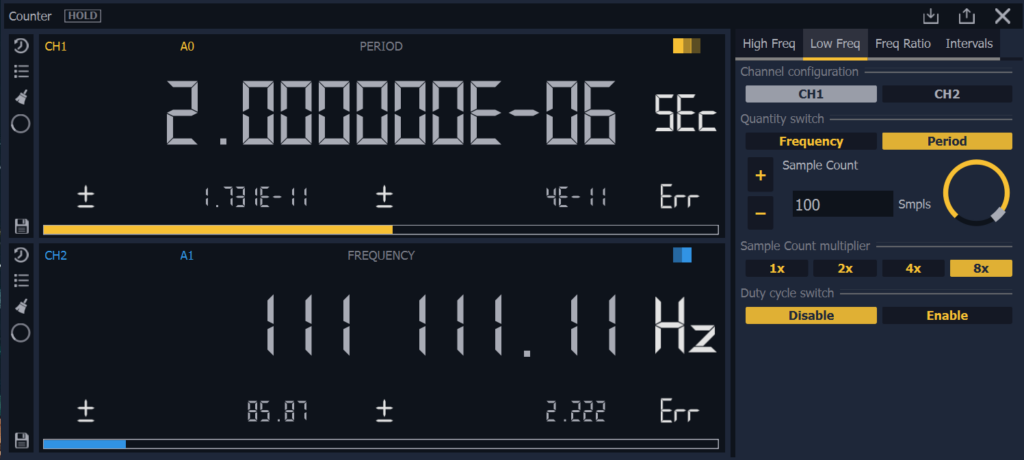
Counter
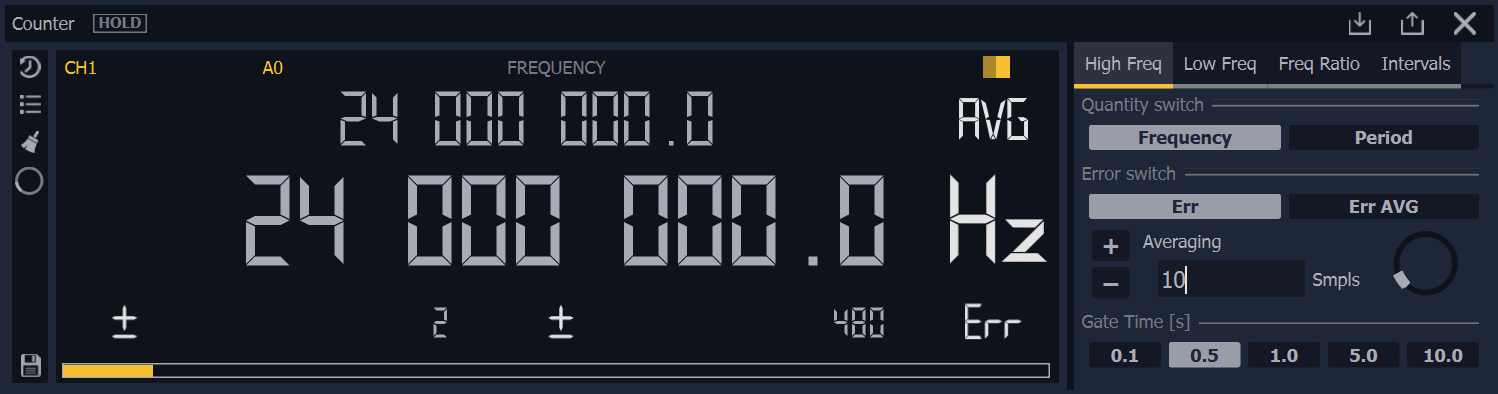
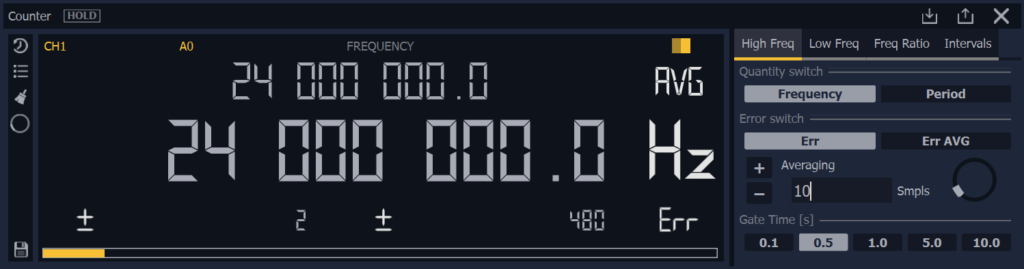
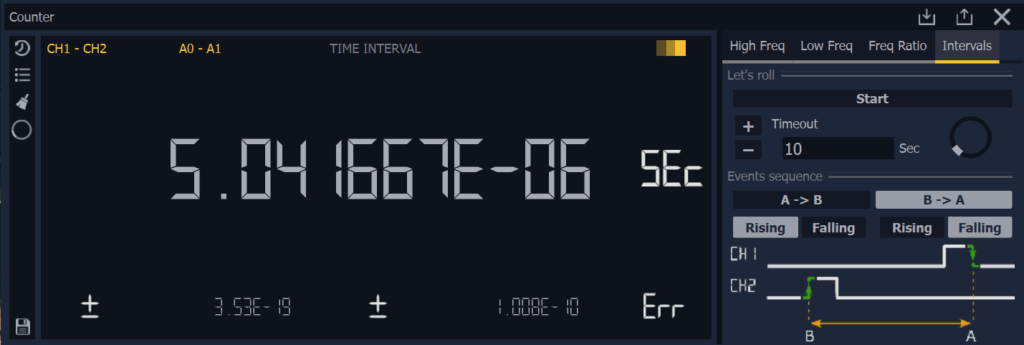
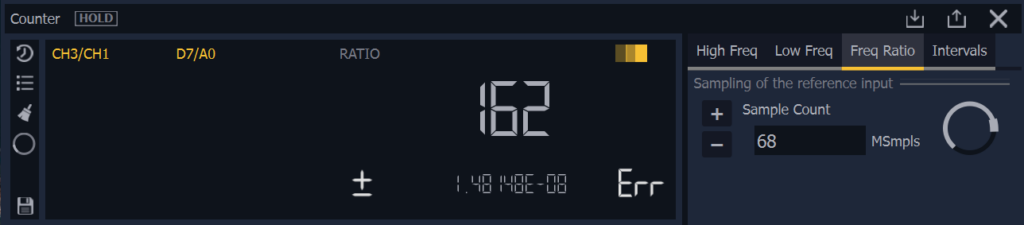
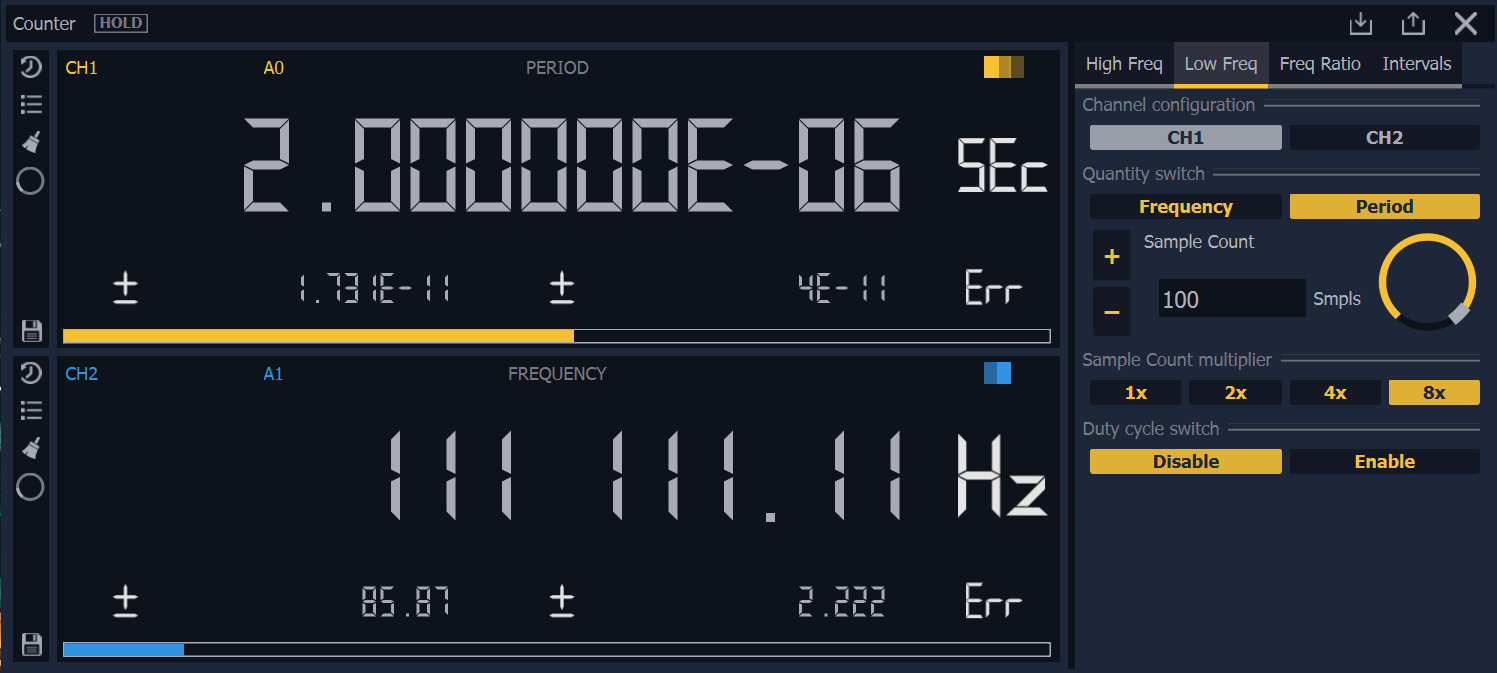
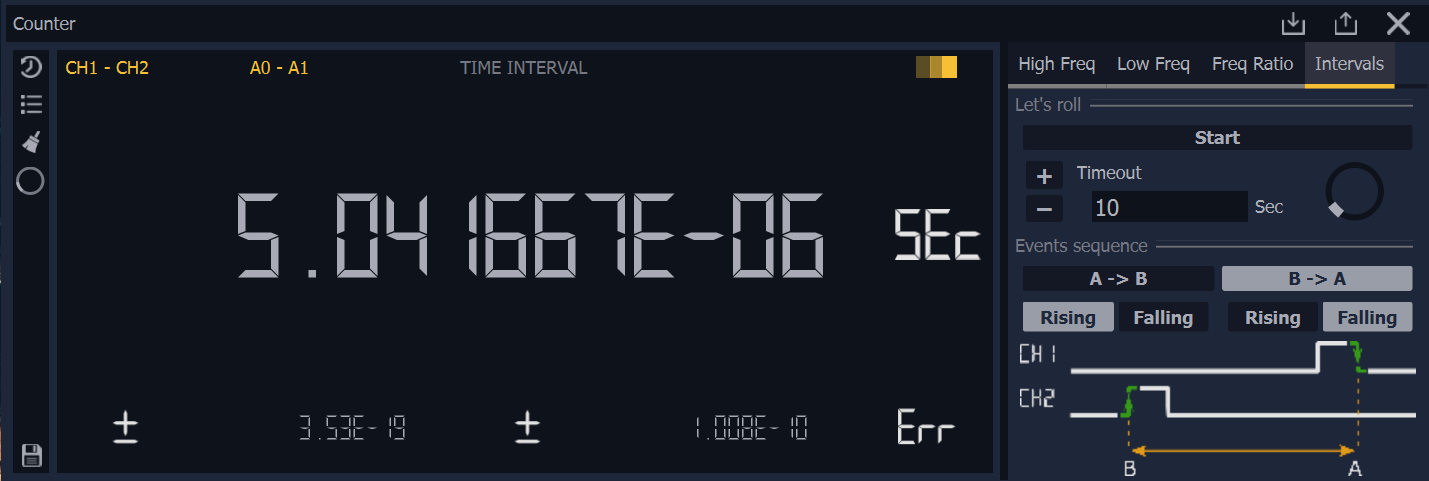
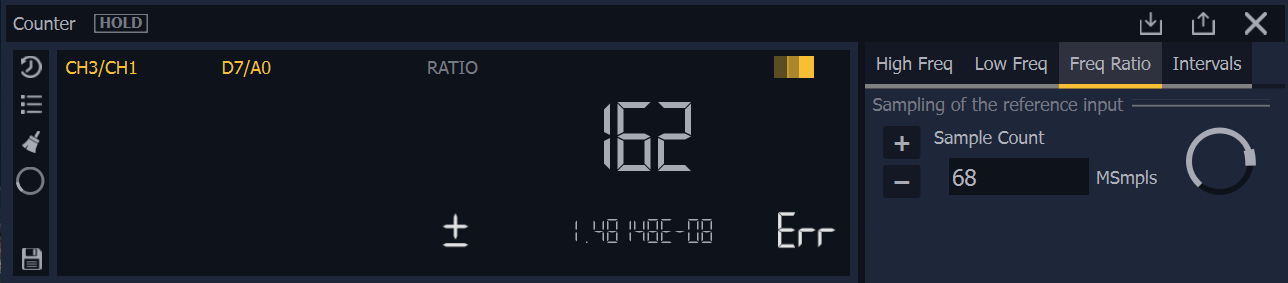
A specialised frequency and time-interval counter for analysing external clock signals. It is optimised for different frequency ranges to ensure high accuracy. It offers HF mode (direct counting) for fast signals, LF mode (reciprocal counting) for accurate frequency and period measurement, TI mode for time-interval measurement, and Ratio mode for comparing frequencies between internal and external channels.
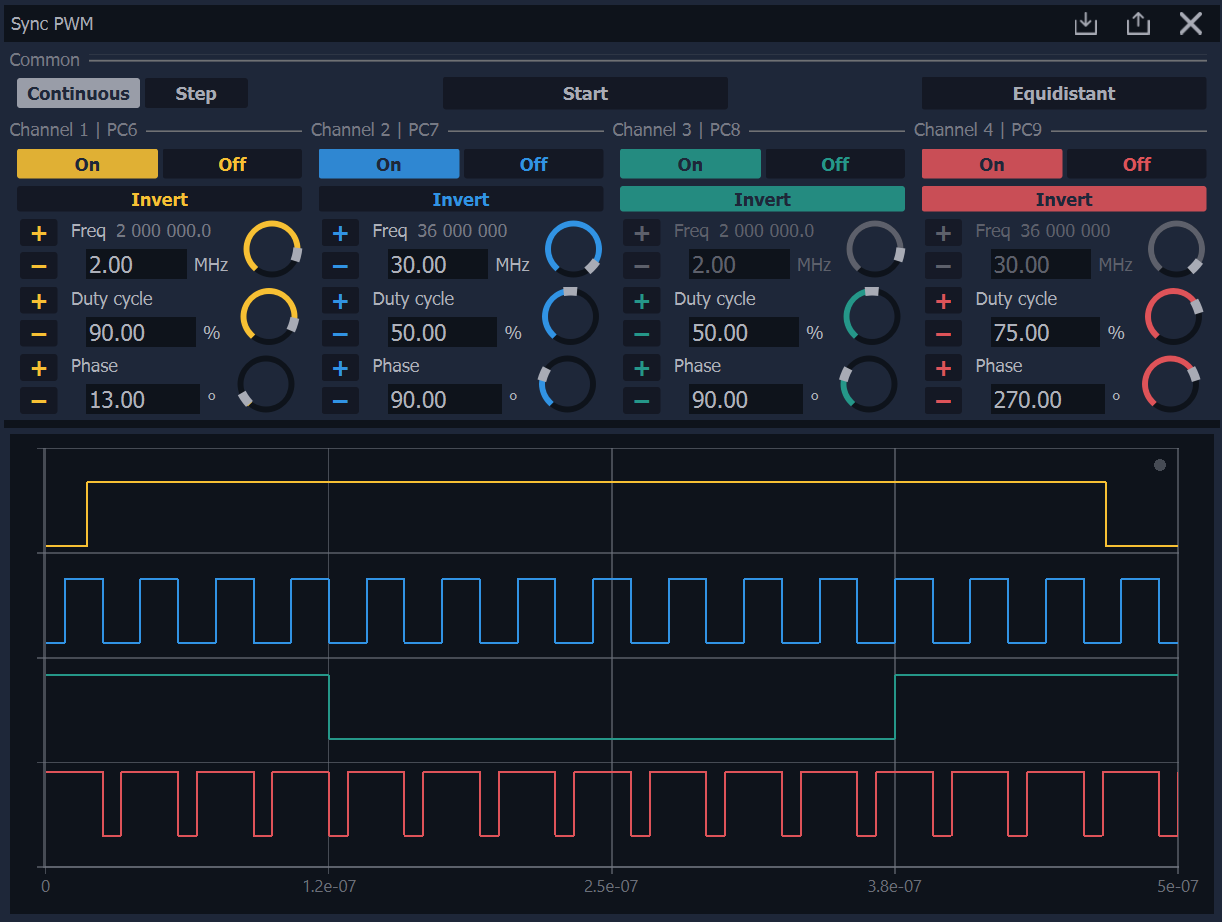
Synchronized PWM
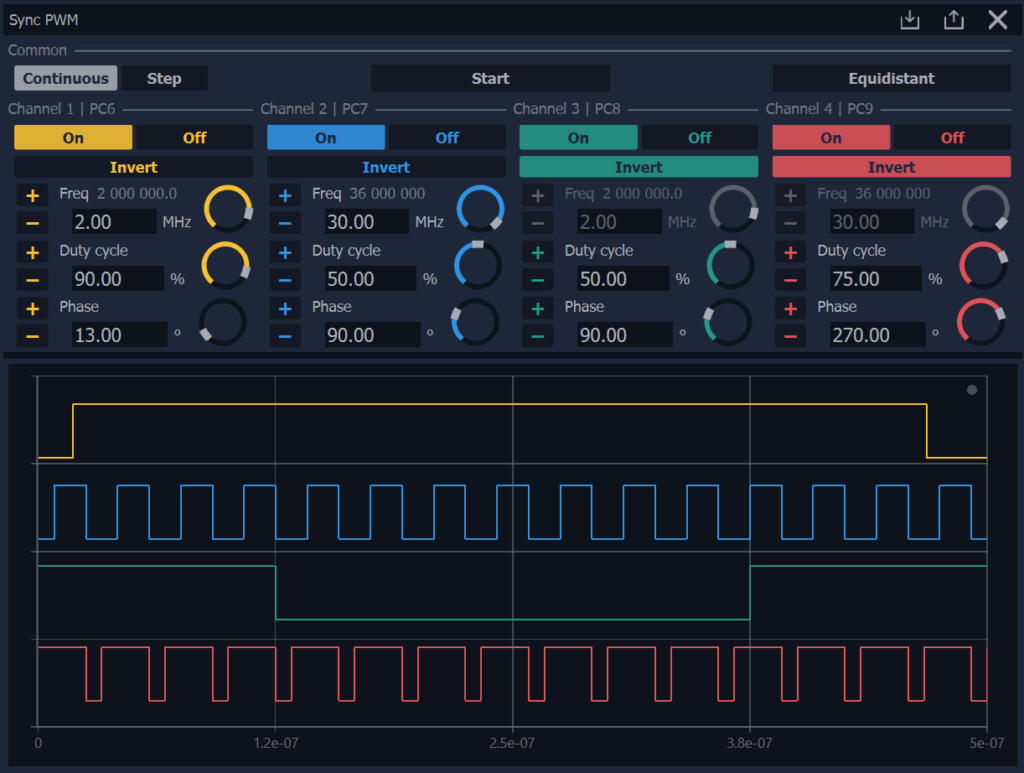
A specialised module that generates multiple pulse-width modulation (PWM) signals. It provides precise duty-cycle control and synchronisation across channels. Supports dependent-channel configuration, phase shift, and step modes for testing commutation sequences.
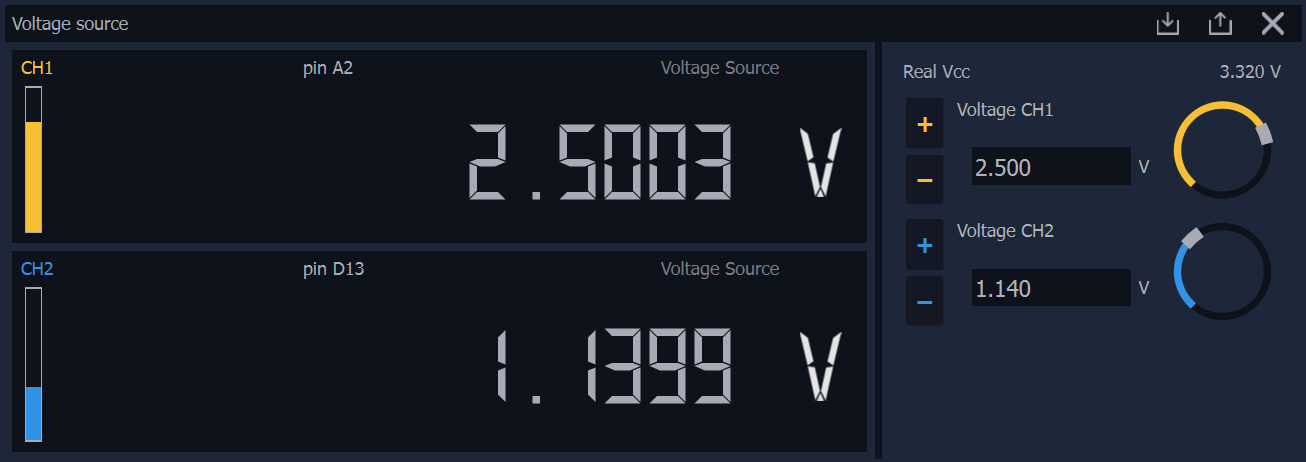
Voltage Source
This module turns the hardware into a programmable DC voltage source. It provides controls for setting precise output voltages on multiple channels, suitable for directly powering tested devices from the unit. It visualises real-time output monitoring (“Real Vcc”) with configurable logical constraints and safety limits.