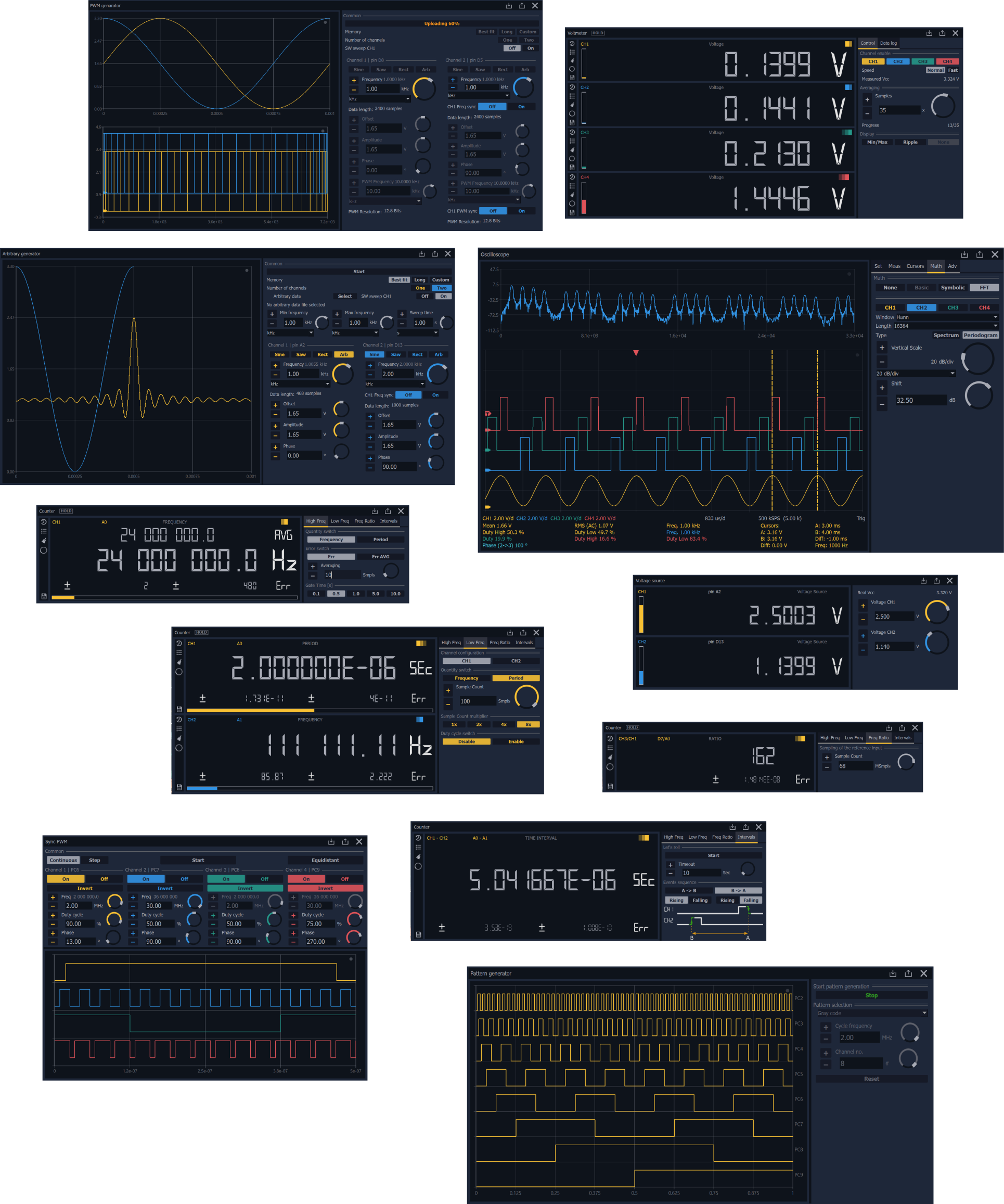
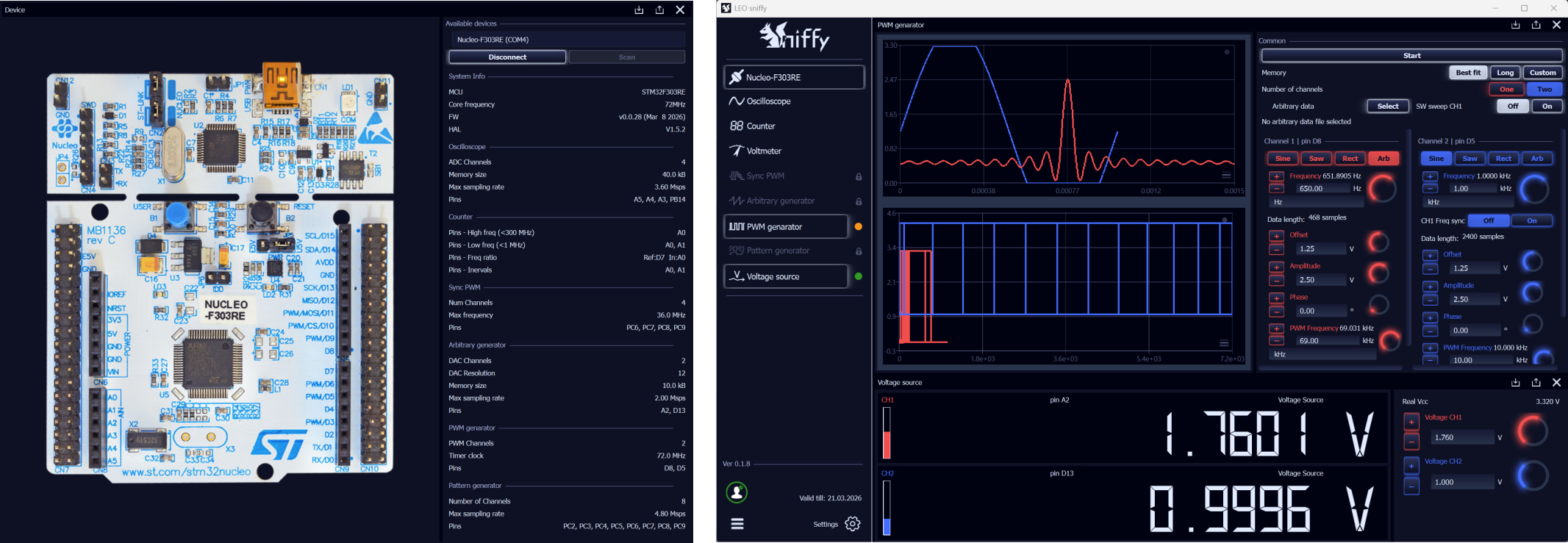
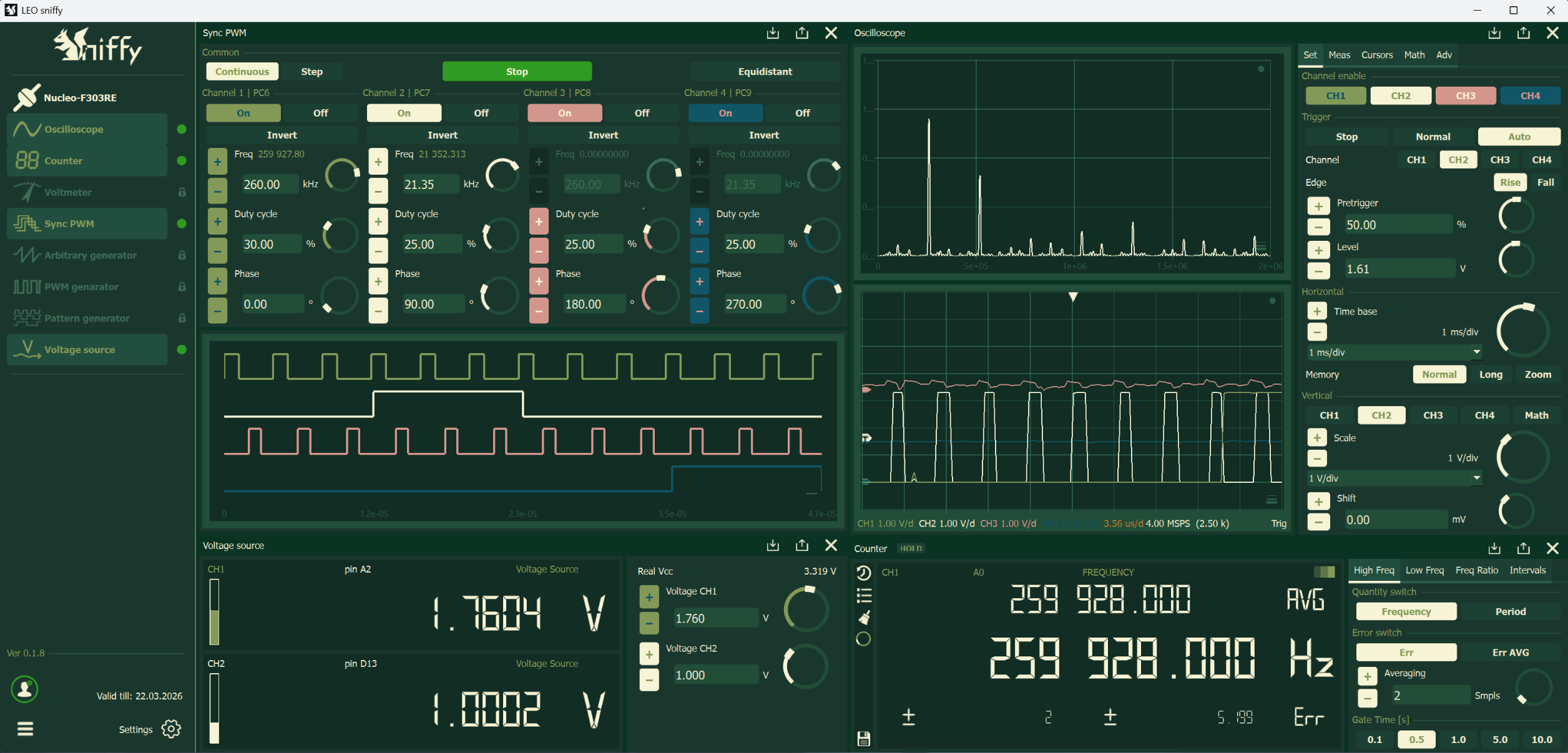
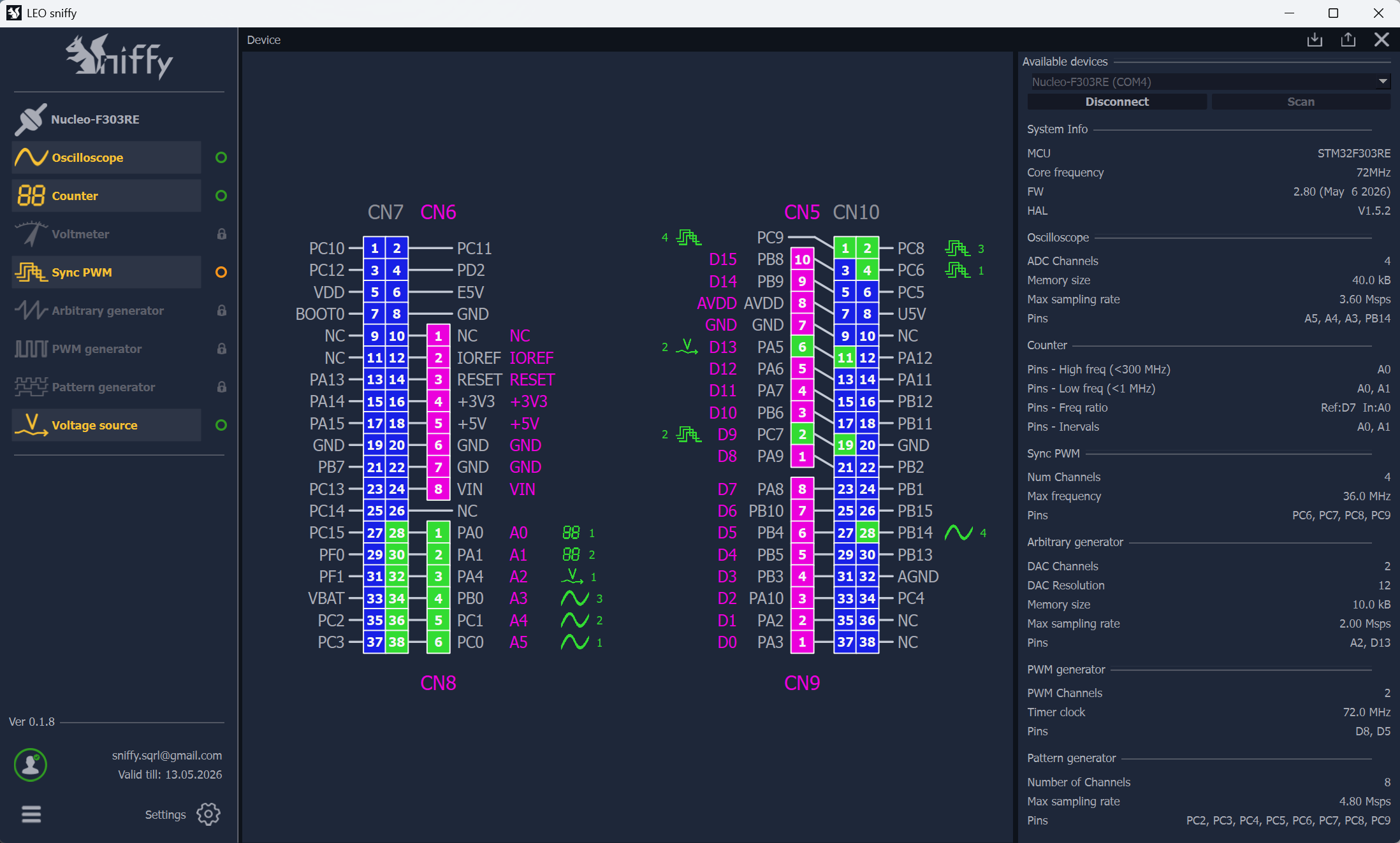

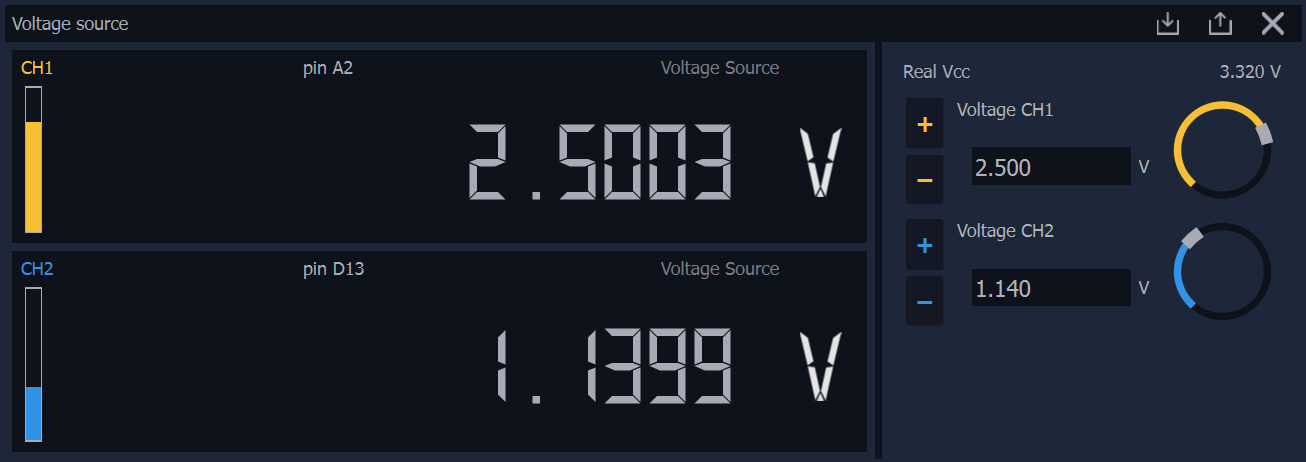
This module turns hardware into a programmable DC voltage source. It provides an interface for setting precise output voltages across multiple channels, which is useful for directly powering devices under test straight from the unit. It visualises real-time output monitoring (“Real Vcc”) with adjustable logic restrictions and safety limits.
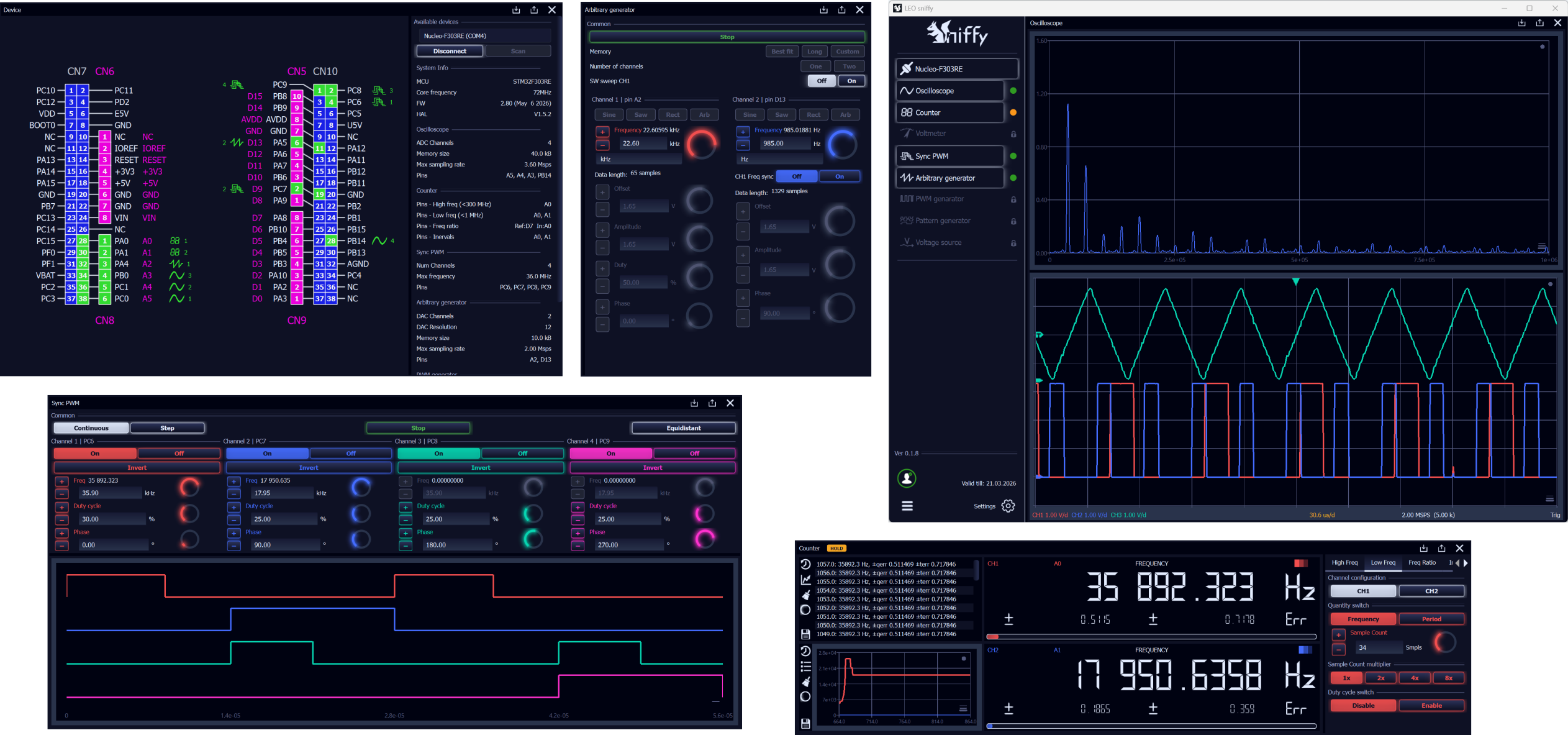
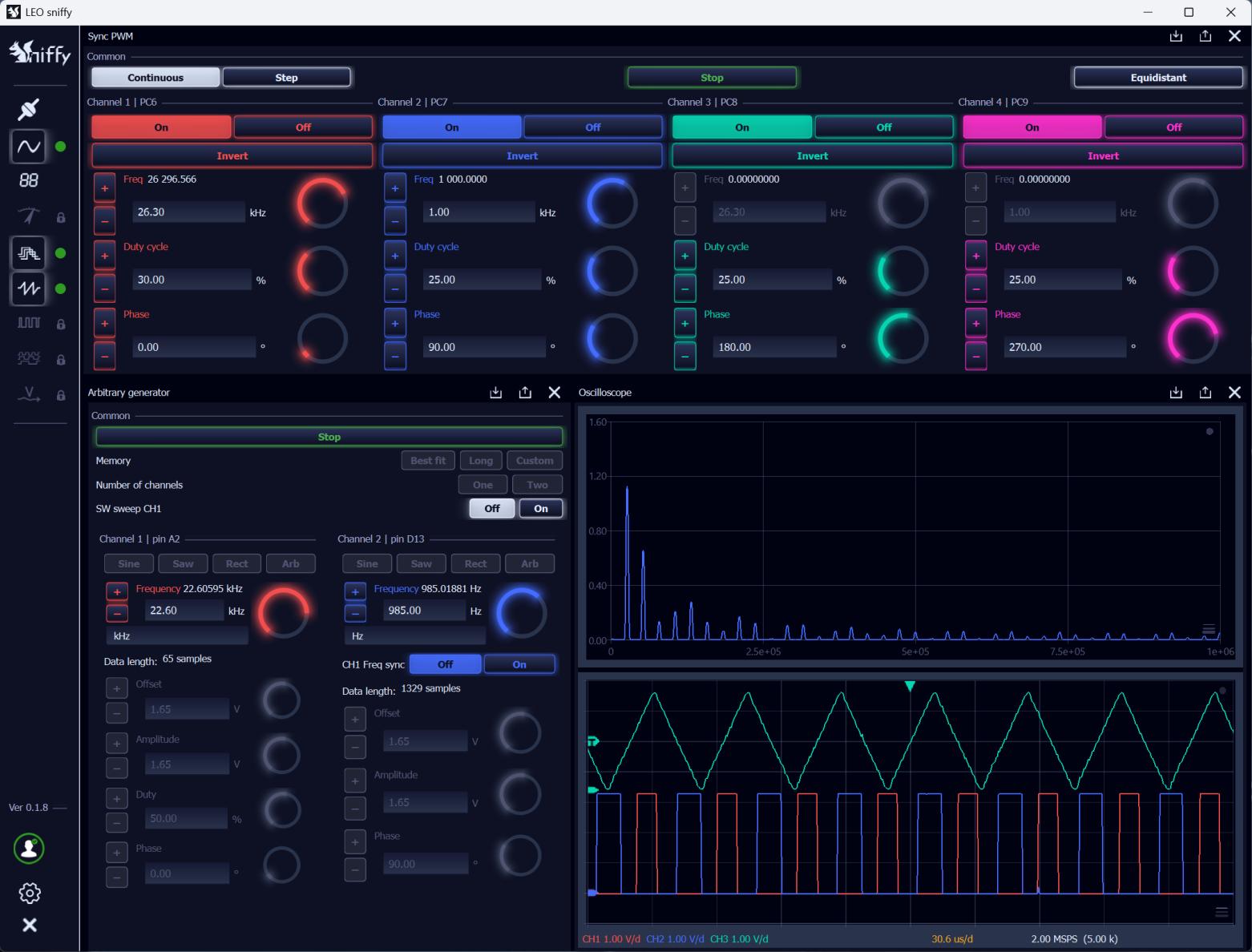
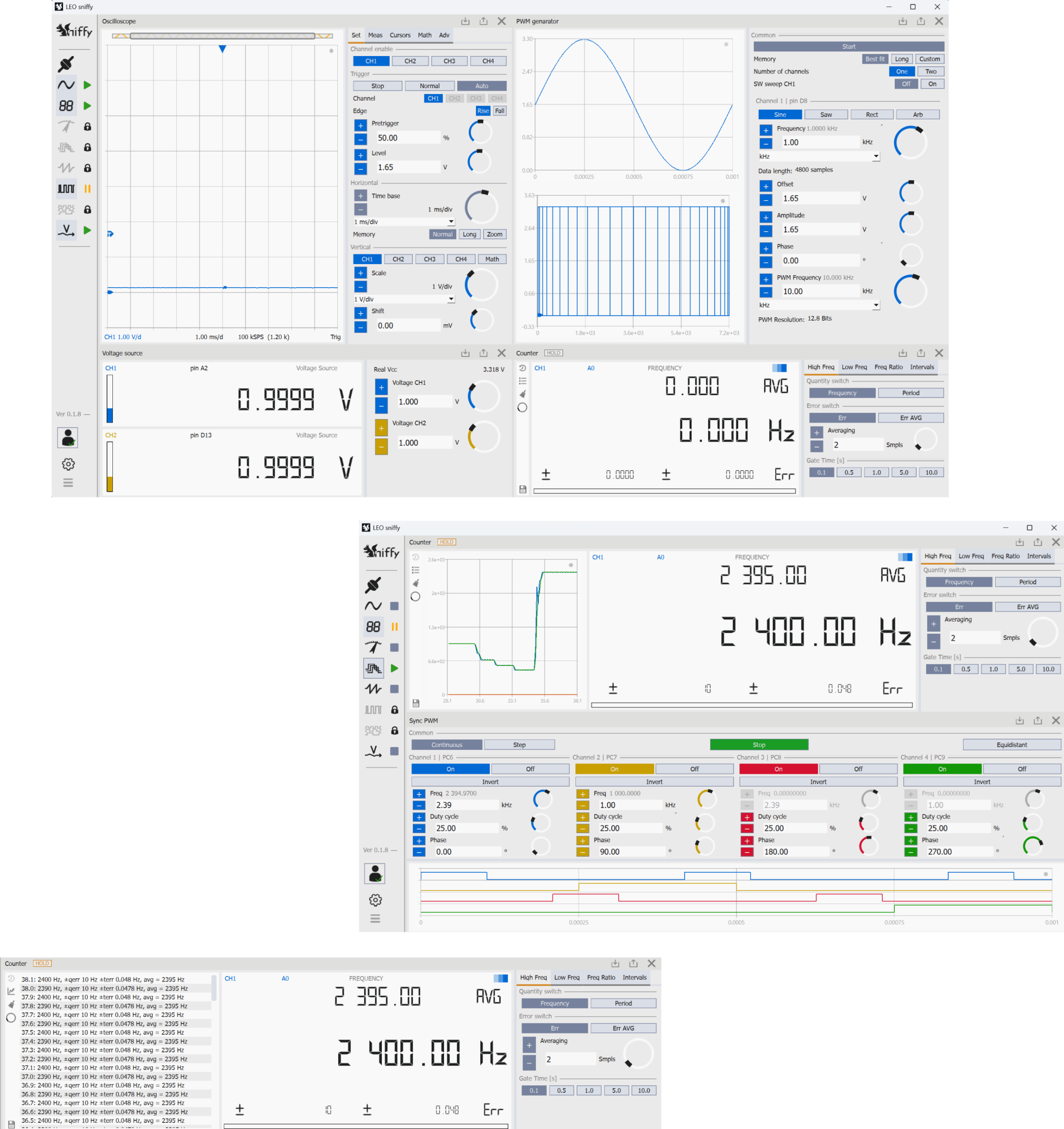
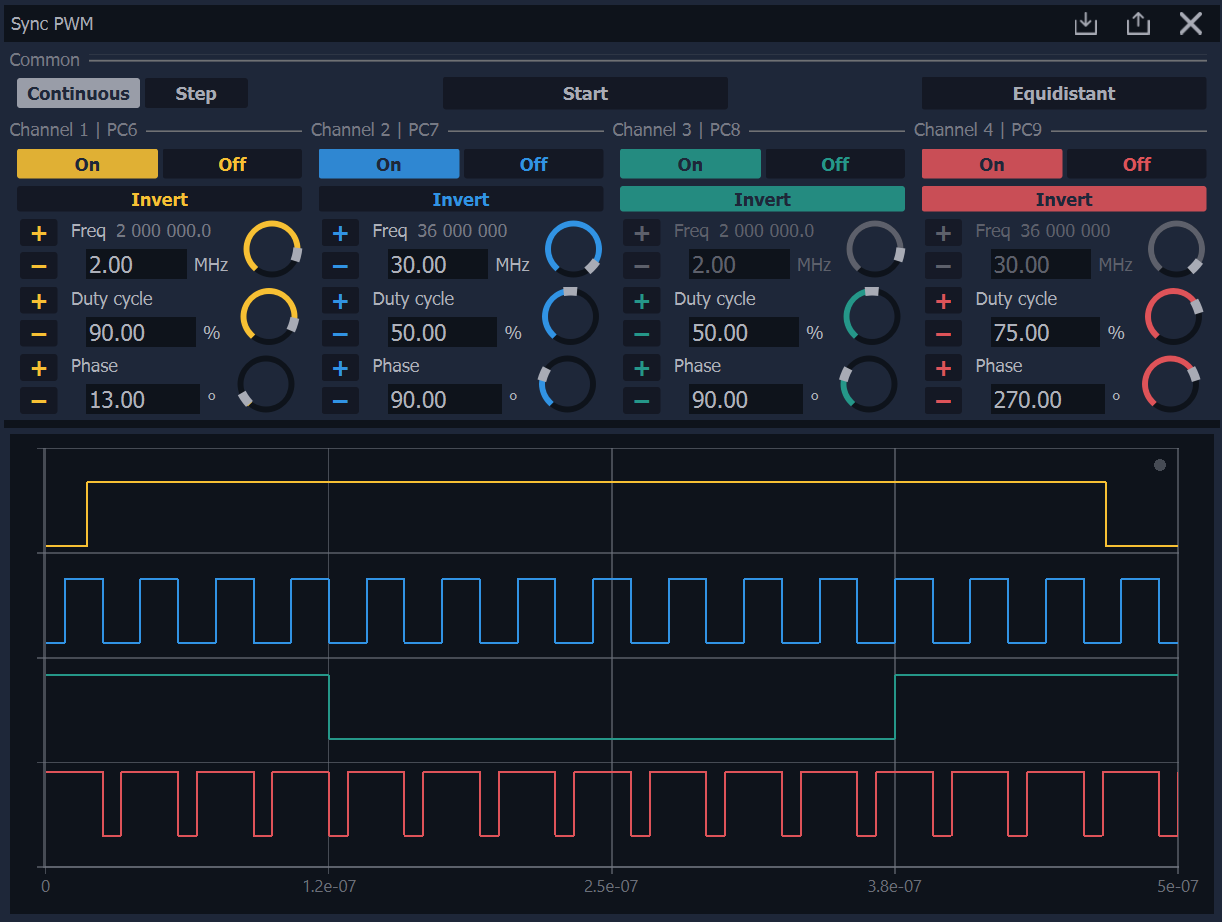
A specialised module that generates multiple pulse-width modulation (PWM) signals. It allows for precise control of the duty cycle and synchronisation between channels. It supports the configuration of dependent channels, phase shifting, and stepping modes for testing commutation sequences.
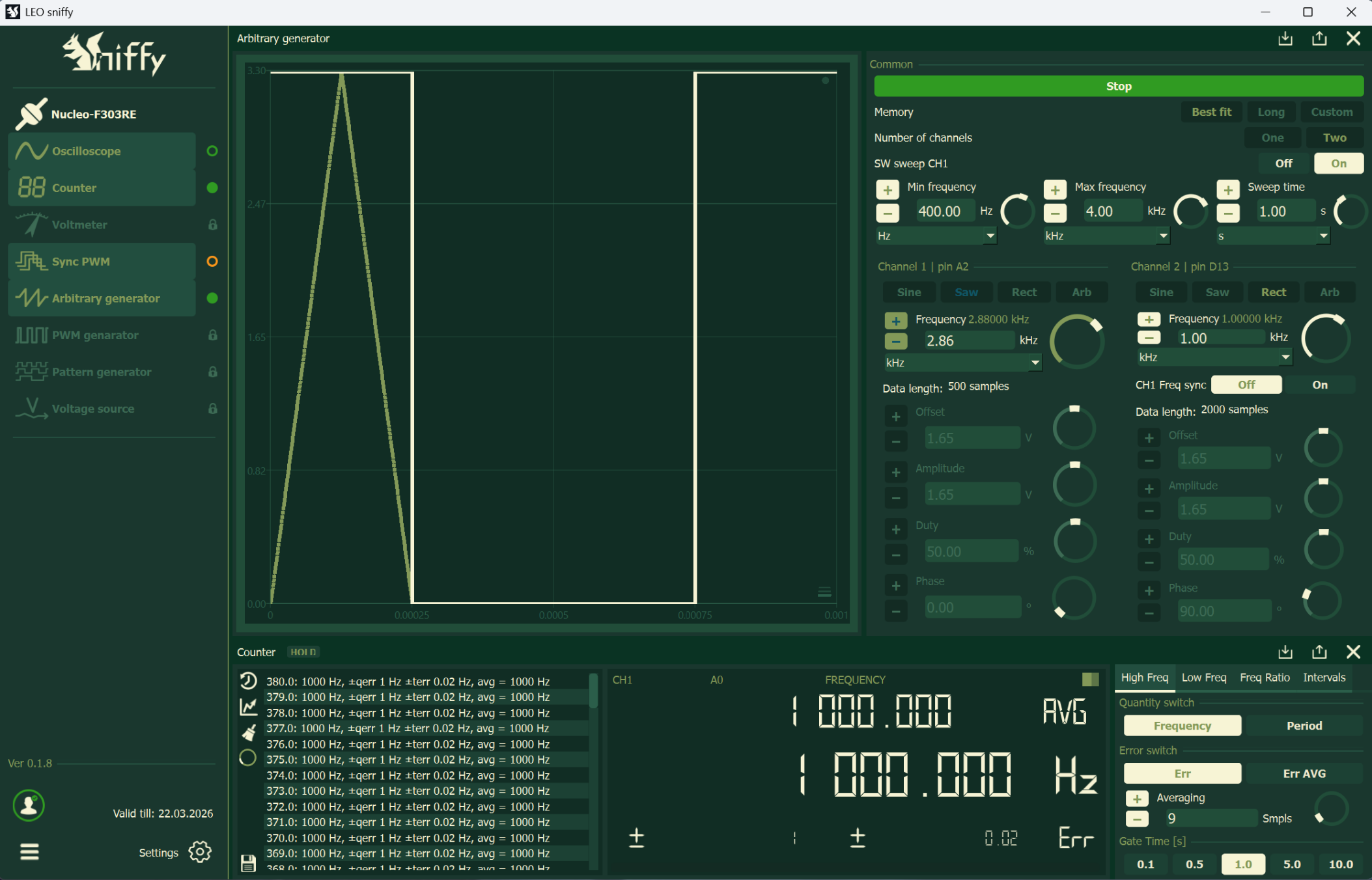
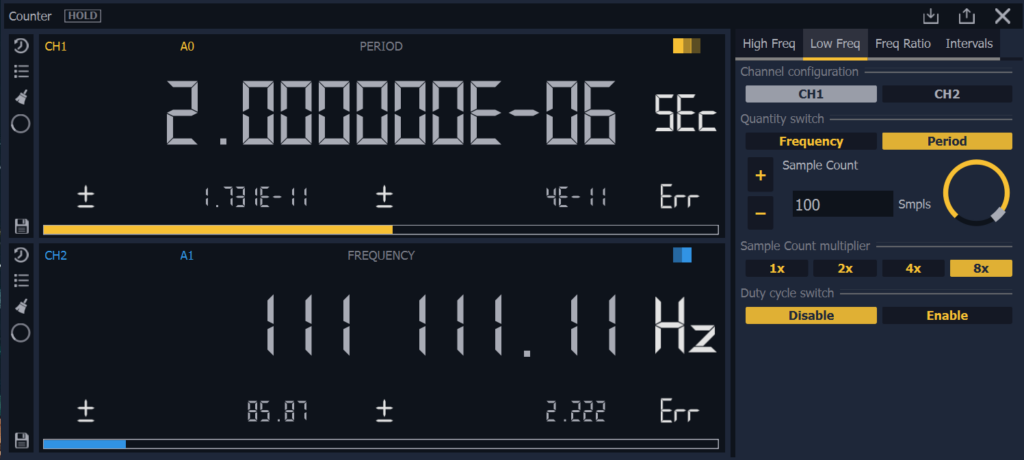
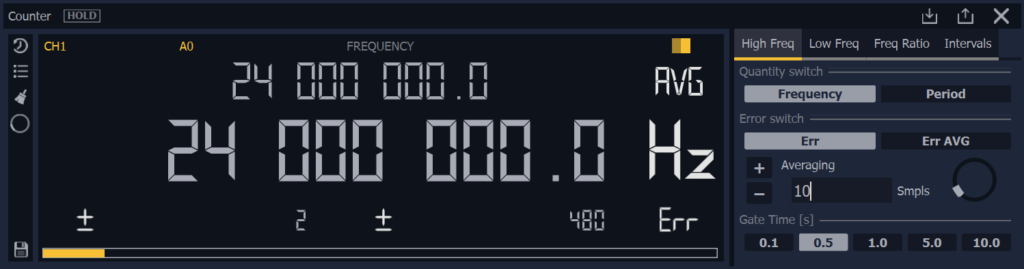
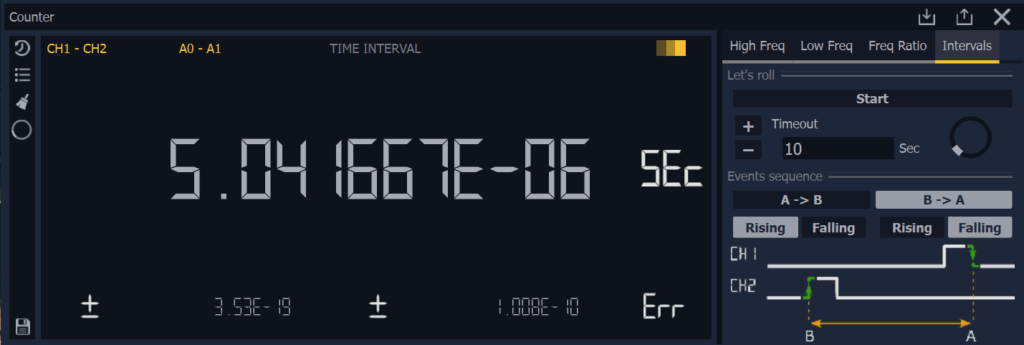
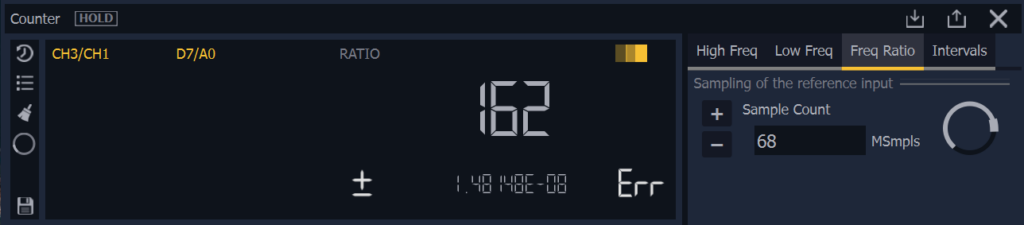
A specialised frequency and time interval counter for the analysis of external clock signals. It is optimised for various frequency ranges to ensure high accuracy. It offers HF mode (direct counting) for fast signals, LF mode (reciprocal counting) for precise frequency and period measurement, TI mode for time interval measurement, and Ratio mode for comparing frequencies between the internal and external channels.
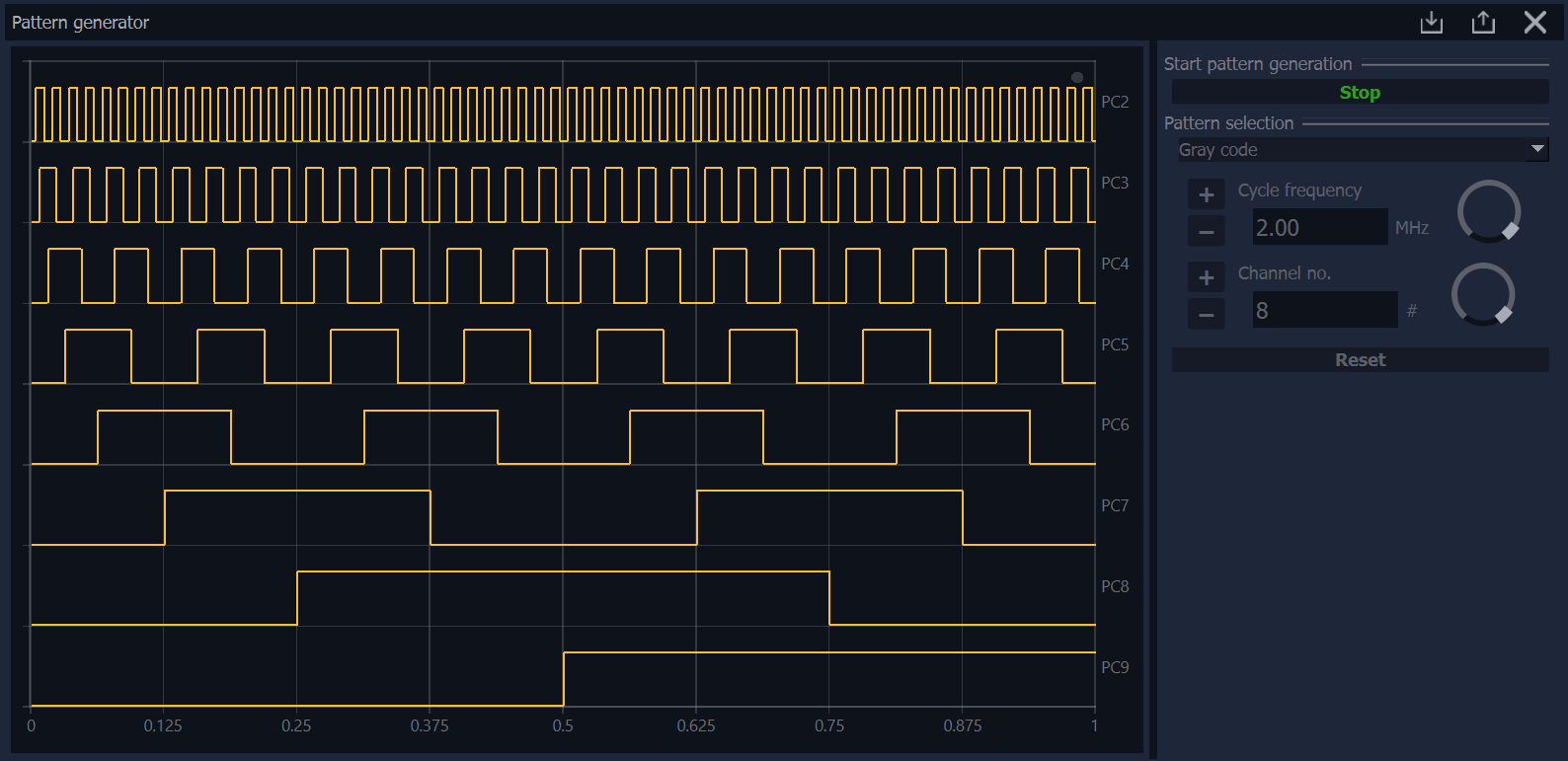
The pattern generator serves as a source of digital logic, useful for testing digital circuits and communication buses. It can drive output pins with predefined sequences or algorithmic patterns. Modes include binary counter, Gray code generator, and user-defined sequences for custom logic states.
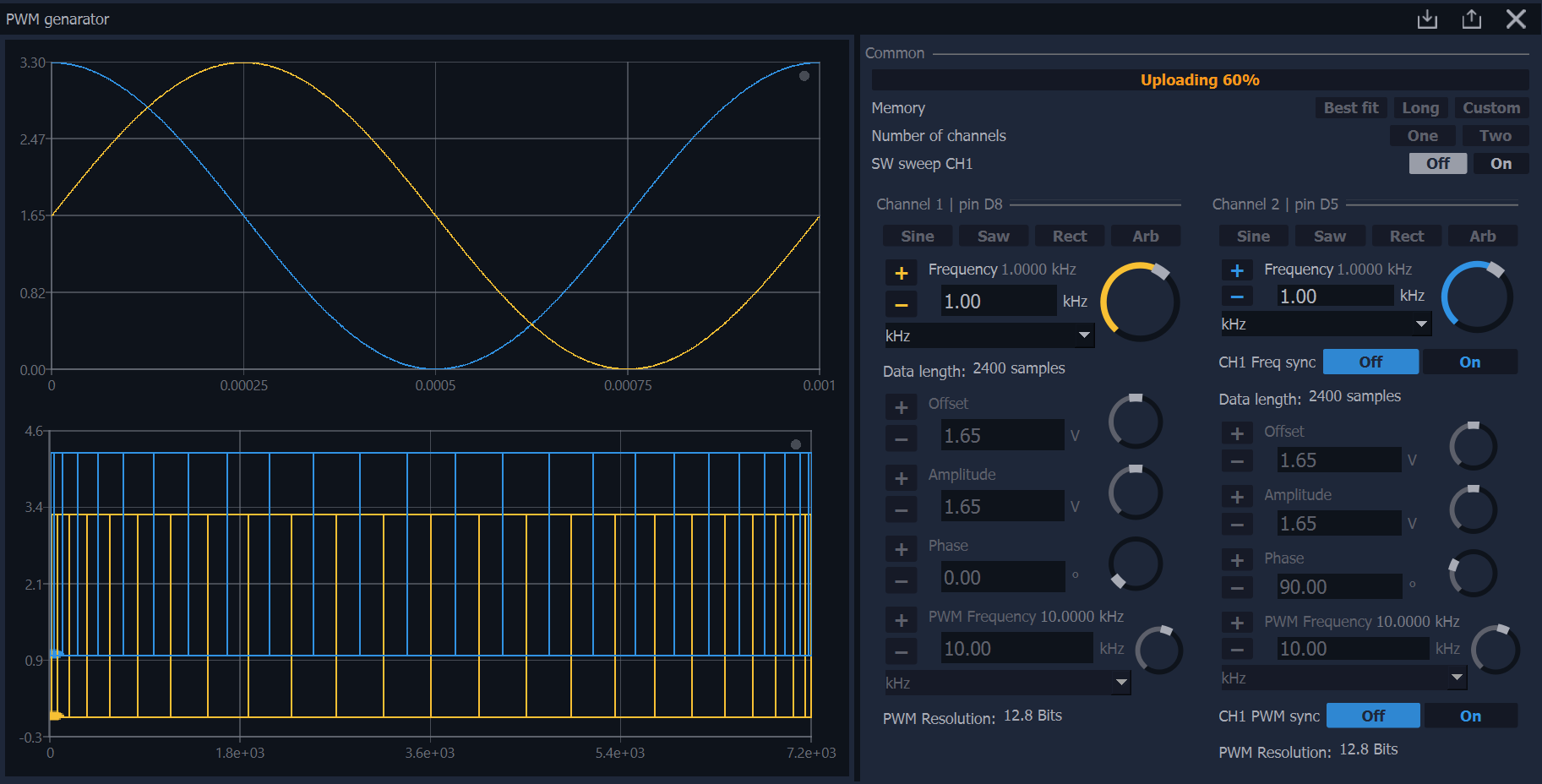
This module generates a PWM signal where the duty cycle dynamically changes over time according to a selected pattern. The duty cycle change can occur according to standard functions (Sine, Triangle, Square) or according to a user-defined custom arbitrary signal. It allows independent setting of the PWM carrier frequency and the modulation signal frequency.
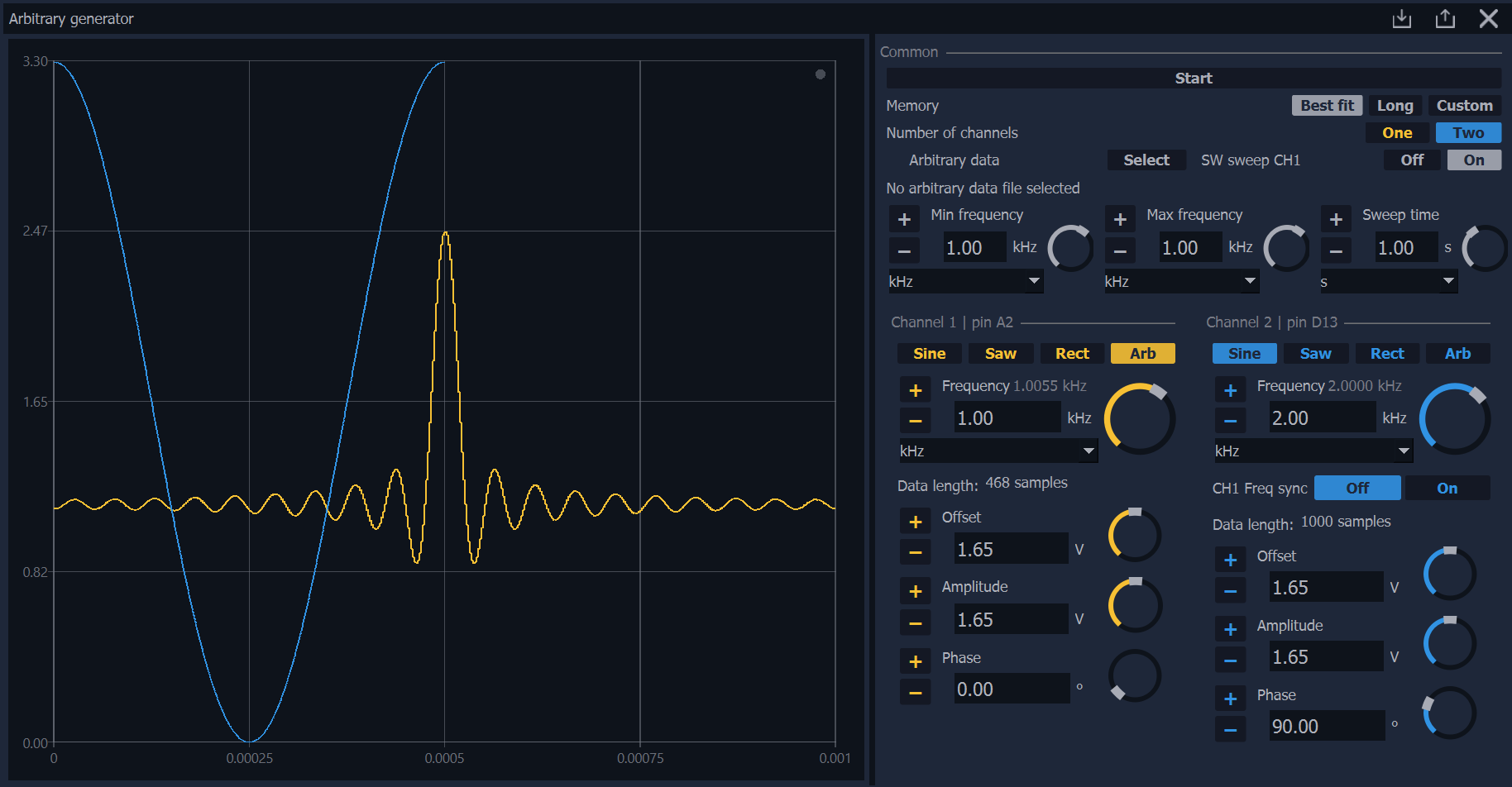
This module functions as a versatile function generator capable of producing both standard waveforms (Sine, Triangle, Square) and custom arbitrary signals. Users can fine-tune the frequency, amplitude, offset, and phase for each channel. It allows for the import of custom waveform data from CSV or TXT files. Furthermore, it provides a Sweep function, which enables the generation of a signal with a smoothly varying frequency, where the start and end frequencies (min/max) and the sweep time can be defined.
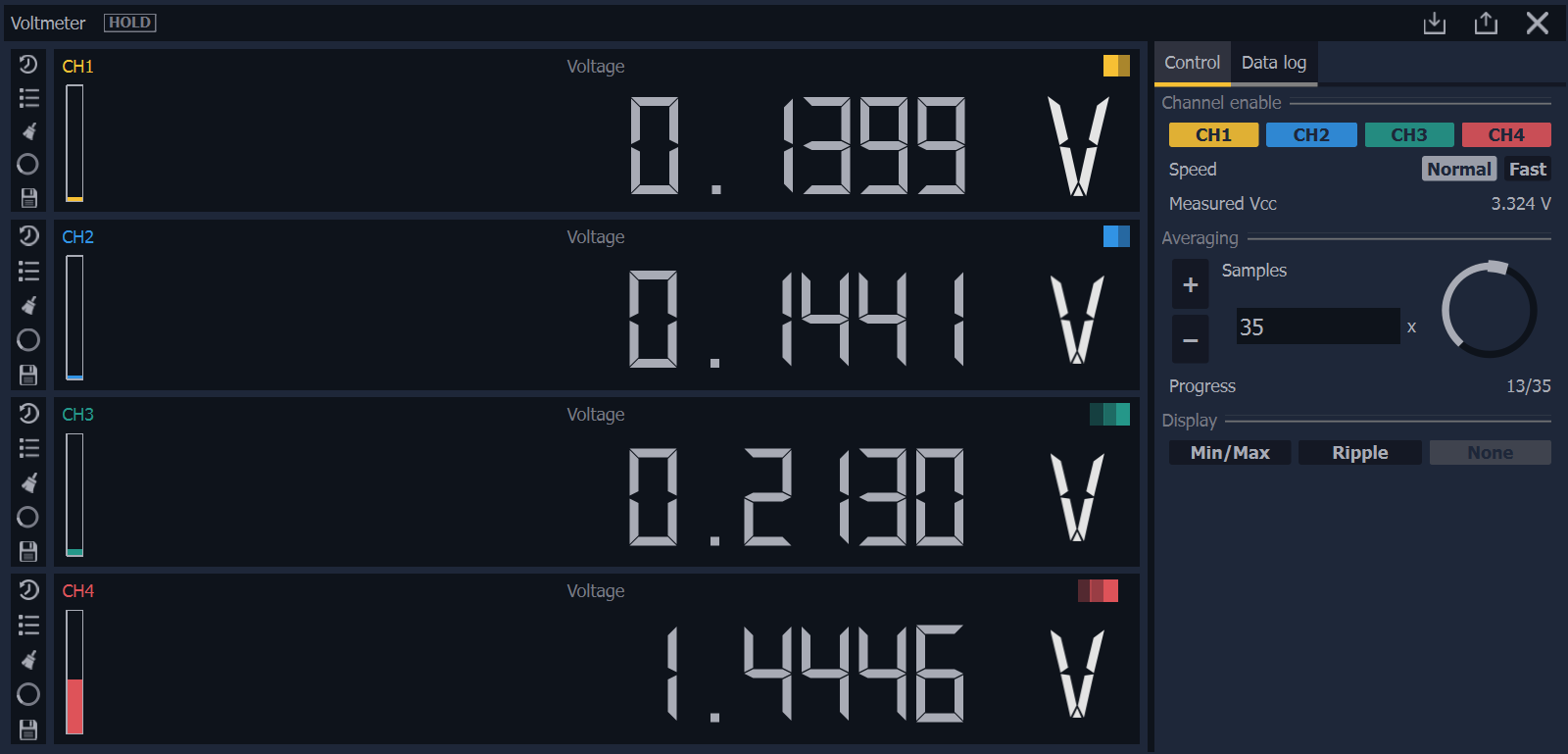
Designed for precise voltage measurement, the voltmeter features a clear numeric display similar to desktop instruments. It includes a history graph for tracking trends over time and a data logger for exporting long-term measurements to CSV files. It supports Min/Max value tracking, ripple measurement, and configurable averaging for smoothing noisy signals.
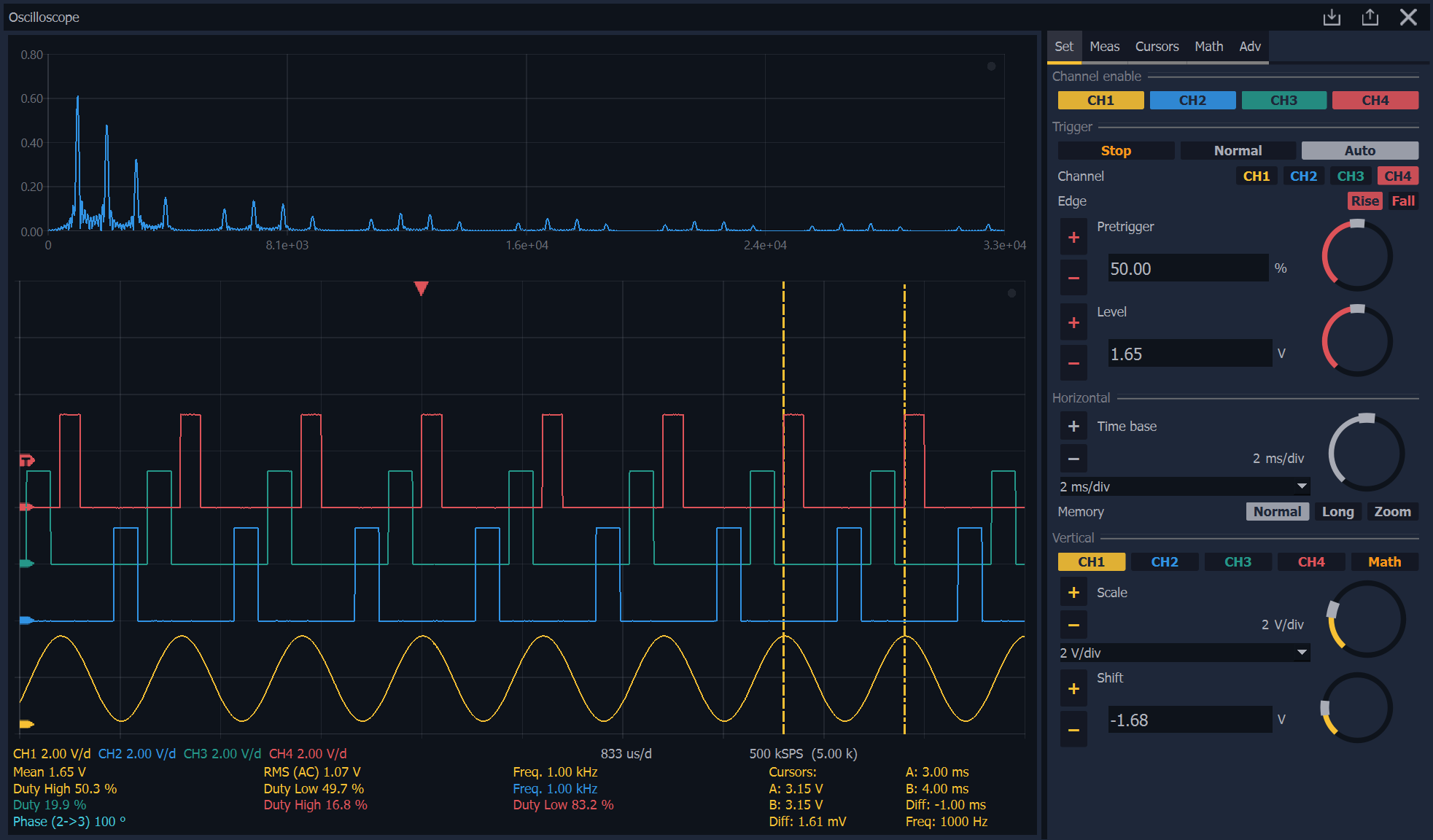
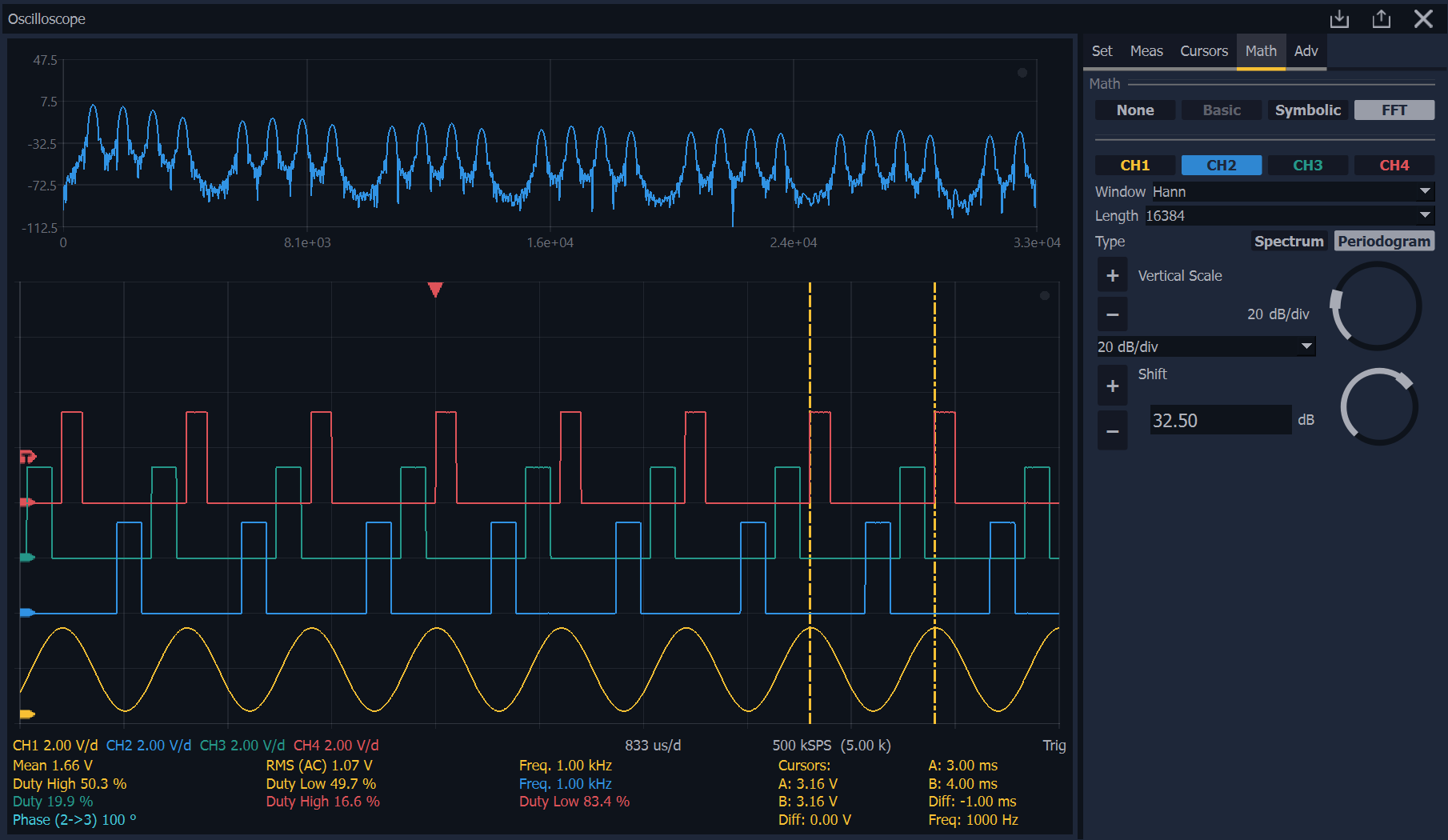
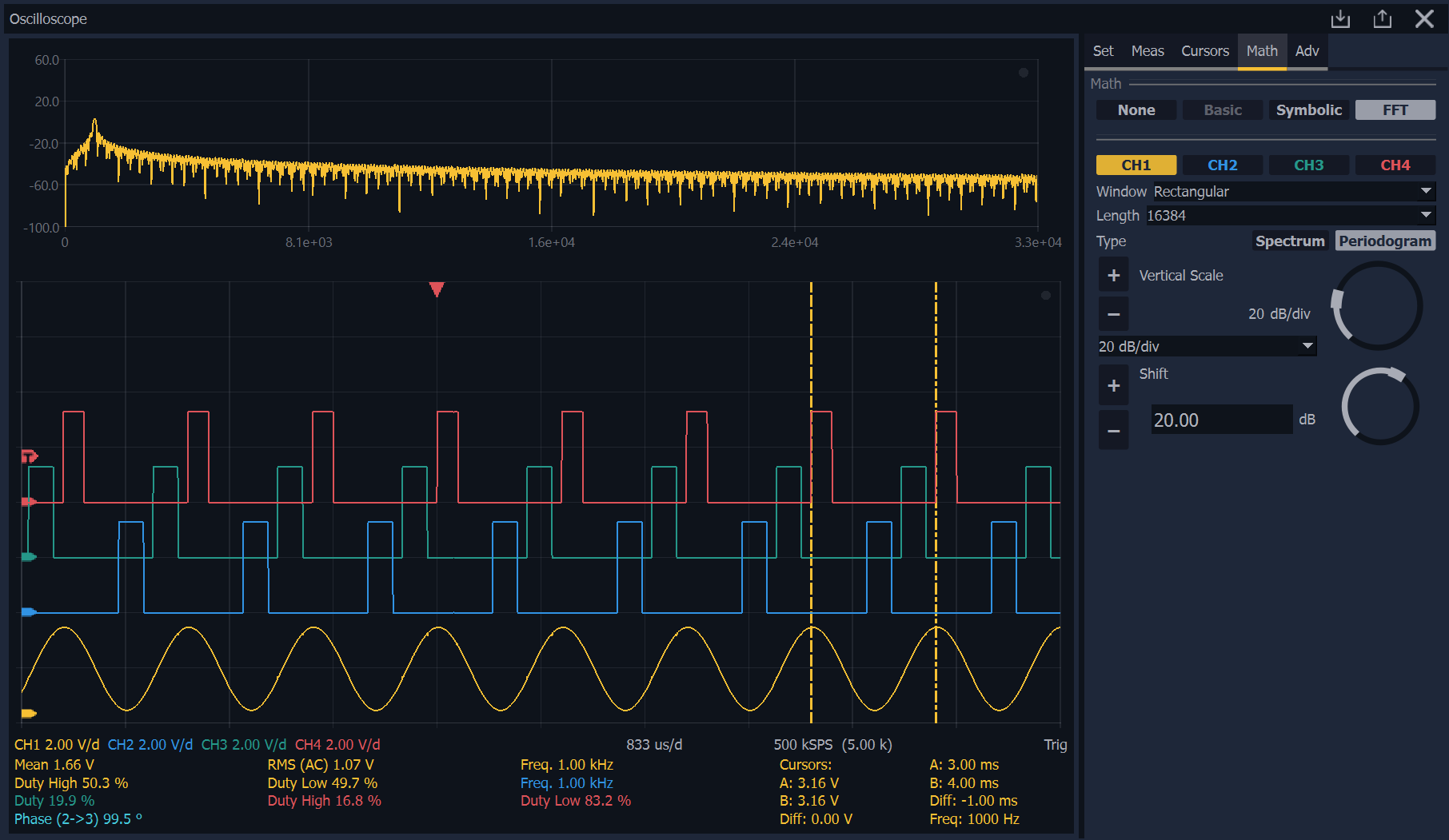
The oscilloscope is the main tool for real-time signal visualisation and analysis, with support for up to 4 channels. It offers comprehensive triggering options (Auto, Normal, Single) and adjustable timebase and vertical sensitivity. It includes automatic measurements (RMS, Peak-to-Peak, Frequency), cursor control, FFT spectral analysis, XY mode (Lissajous figures), and symbolic mathematical operations between channels.